Sirius Software
~ the obit ~
Terry Bradley was an Air Force veteran who opened a ComputerLand franchise in Sacramento in 1979, back when a computer store was still a strange thing to have on a street. He hired Jerry Jewell to run sales. In November 1980 the two of them started a software company out of the back of the shop, which was how most software companies started that year.
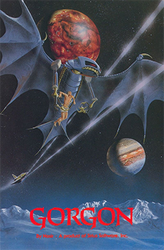
What made it work was a customer. Nasir Gebelli was a Cal State student from Iran who kept bringing his own Apple II programs into the store, and what he could do with that machine was not ordinary. His Gorgon, released in 1981, pulled the arcade game Defender onto the Apple II at a speed people did not think the hardware had in it. By June 1982 it had sold 23,000 copies, which for a personal computer game in 1982 was an enormous number.
Gebelli left in the summer of 1981 over equity. He wanted a piece of the company and the founders wanted to keep paying him royalties, so he went and started Gebelli Software instead. Sirius kept growing without him. By August 1981 it had six titles in Softalk's top thirty. First-year sales came to roughly $3.5 million and 1983 sales to $11 million, and in early 1984 InfoWorld ranked it the fifteenth largest microcomputer software company on earth. More than 160 titles went out under the name across the Apple II, the Atari 8-bit machines, the Commodore 64 and the VIC-20.
It was dead before the end of that year. I was born in 1984 and got my first modem in 1998, so the whole life of this company fits inside the gap before I could have noticed any of it. Four years from the back of a computer store to the InfoWorld rankings, and then nothing.
~ the rap sheet ~
| Born | November 1980, Sacramento, out of a ComputerLand franchise |
|---|---|
| Peak | $11 million in 1983 sales, ranked 15th largest software company in the world |
| Killed | 1984 |
| Lifespan | 4 years |
| Made by | Jerry Jewell and Terry Bradley |
| Killed by | 20th Century Fox Video Games not paying what it owed |
~ the money that never arrived ~
In late 1982 Sirius signed with 20th Century Fox Video Games to develop Atari 2600 cartridges. This looked like the smart move. The 2600 was where the volume was, Fox had money and a distribution arm, and Sirius would write the games and take a royalty on every cartridge sold. Titles went out under the Fox label through 1982 and 1983.
Then the crash came, Fox shut the games division, and the royalty checks stopped. Accounts of the amount vary between roughly fourteen and eighteen million dollars, which tells you how little of this ever reached a courtroom in a form anyone could report cleanly. Either figure was more than the company had ever made in a year. Sirius filed for bankruptcy in 1984 with a catalog of 160 games and an unpayable hole where its receivables should have been.
~ what got buried with it ~
The bankruptcy itself produced one more indignity. The attorney handling it left with the remaining capital, around $100,000 that was supposed to cover royalties owed to the company's own programmers and fund a reorganization. He went to prison for embezzlement some years later, by which point there was nothing to reorganize.
Gebelli, the programmer who had left three years early over a share of a company that turned out to be worth nothing, had the best afterlife of anyone involved. He ended up at Square in Japan and wrote the code for the first three Final Fantasy games and later Secret of Mana, which means the Apple II kid from Sacramento is in the credits of the series that defined the console RPG. Jerry Jewell went to Epyx, then to a venture called SoftPros that did not work. He builds animatronics now. Sirius itself left 160 titles and a lesson about who your customer actually is, which is a thing you only learn once.
~ leave a rose ~
an anonymous tribute. one rose per visitor per day.
@}-->-- ... roses left here
~ leave a wreath ~
a rose fades by morning. a wreath stays on this grave for good, with your name on it.
from $1, paid once through stripe. it keeps the graveyard running: the hosting and the nightly digging. adopt it and the headstone reads "maintained in memory by" you. the groundskeeper plants new wreaths at the next tending, usually within a day.
» one email a week: new graves and the anniversaries of the dead. subscribe
other gaming: Star Wars: Hunters, United Front Games, Shift 2: Unleashed, FIFA World
also died in the 1980s: Viditel, Creative Computing, Telidon
~ leave a note ~
visitors before you have left these graveside notes. anonymous welcome.