RSO Records
~ the last words ~
The letters stood for the Robert Stigwood Organisation, which had existed since 1967, when Brian Epstein died and Stigwood took the management company out on its own. The record label came later. In 1973 Stigwood and the American record executive Al Coury set up RSO Records at 67 Brook Street in Mayfair, and the first artists on it were Eric Clapton and the Bee Gees, both of whom Stigwood already managed.
Clapton paid first. 461 Ocean Boulevard arrived in July 1974 produced by Tom Dowd, carrying "I Shot the Sheriff" to number one, and for a while Clapton and the Gibb brothers were the only reliable hit sources on the roster. Then Arif Mardin produced Main Course for the Bee Gees, "Jive Talkin'" went to number one in 1975, and a harmony group from the sixties turned into a disco act. Stigwood, who was also producing films, noticed what he had.
What he did with it has no real precedent. He made Saturday Night Fever and put the Bee Gees on the soundtrack, which has sold more than fifty million copies, and then made Grease, which has sold more than thirty million. Four number one singles came off the Fever album alone, three by the Bee Gees and one by Yvonne Elliman singing a song the Gibbs wrote. A label five years old was briefly the most commercially successful operation in the record business, on the strength of two films its own owner had produced.
~ the record ~
| Born | 1973, 67 Brook Street in Mayfair, distributed by Atlantic |
|---|---|
| Peak | 1978, six consecutive Billboard number ones and 21 straight weeks at the top |
| Killed | 1983, absorbed into PolyGram |
| Lifespan | about ten years |
| Made by | Robert Stigwood and Al Coury |
| Killed by | PolyGram, which had been distributing it since 1976 |
~ the cow ~
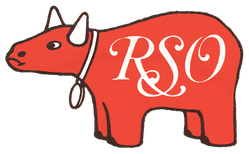
The logo was a cow, and the reason is better than any designer's rationale. Japanese friends had given Stigwood an akabeko, a papier-mache cow that is a traditional charm for good health and good fortune. He told Billboard in 2001 that he looked at it and thought: just write RSO on it. What got printed is bright red and horned, with a bell at its throat and the three letters set in white across its flank. For ten years that cow sat in the middle of every record the company pressed, including the biggest-selling soundtrack anybody had ever made.
It is also the part of RSO that traveled furthest without explaining itself. The soundtracks were everywhere, Turkey included, long before I was born and long past when anyone remembered where they came from. What you would find on a secondhand copy in a Turkish record shop in the nineties was a red cartoon cow with three letters on its side, and nothing on the sleeve to say that one of them was a man's surname. The 1978 Sgt. Pepper film returned the joke by inventing a record company called Big Deal, whose logo was the RSO design with a pig standing in for the cow.
~ nine in one year ~
The 1978 chart run is the number the label is remembered by. At one stretch RSO held six consecutive number one singles on the Billboard pop chart and owned the top position for twenty-one weeks without a break. Later that year "You're the One That I Want", the Grease title track and Andy Gibb's "Shadow Dancing" added ten more weeks, giving the label nine number ones inside one calendar year. Fred Bronson's history of the Billboard number ones records it as a feat still unmatched by any label.
Andy Gibb is the clearest illustration of how concentrated this was. He signed in 1977, aged nineteen, and reeled off three straight number ones written mostly by his older brothers. Underneath the headline acts the roster was thin: a Rick Dees novelty record about a disco duck, Player, Smokie, Paul Nicholas, a John Stewart single with Stevie Nicks and Lindsey Buckingham on it. RSO also handled the soundtracks for Fame, The Empire Strikes Back and Return of the Jedi, and from 1979 it released and distributed Curtis Mayfield's Curtom label.
Then came the film adaptation of Sgt. Pepper's Lonely Hearts Club Band, with Peter Frampton and the Bee Gees playing the Beatles. Wikipedia calls the soundtrack a disastrous commercial and critical failure that crippled the company. The Both Sides Now label history, written by discographers who worked through the whole catalog, lists the same album as part of a successful soundtrack formula alongside Grease. The sources disagree, and neither of them produces a returns figure or a loss, so the size of the hole is not actually on the record.
~ the countersuit ~
In 1980 the Bee Gees sued RSO and Stigwood for two hundred million dollars, alleging mismanagement. Stigwood countersued for three hundred and ten million, alleging libel and extortion. It settled for an undisclosed sum. After a public reconciliation the band stayed put until the label stopped existing, neither side having many other places to go.
By 1981 Stigwood's involvement had ended, and the distribution arrangement had collapsed back into PolyGram, which had been handling the records since 1976 under one arrangement or another. The logo was retired in 1983 and the masters were folded into Polydor, where most of the catalog still sits under Universal. The Star Wars soundtracks went to Sony Classical in the nineties and then to Walt Disney Records after Disney bought Lucasfilm. The Bee Gees catalog reverted to the Gibb family, who placed it with Reprise and then with Capitol in 2016, the year Stigwood died at eighty-one.
~ leave a rose ~
an anonymous tribute. one rose per visitor per day.
@}-->-- ... roses left here
~ leave a wreath ~
a rose fades by morning. a wreath stays on this grave for good, with your name on it.
paid once through stripe. payments are handled by OÜ Lakeview, the small company that keeps rip.so running. the money pays for the hosting and the nightly digging. adopt it and the headstone reads "maintained in memory by" you. the groundskeeper plants new wreaths at the next tending, usually within a day.
» one email a week: new graves and the anniversaries of the dead. subscribe
other media music: music.download.com, Sellaband, MTV Urge, Snocap
also died in the 1980s: Currah, PlayCable, Super Cassette Vision
~ leave a note ~
visitors before you have left these graveside notes. anonymous welcome.