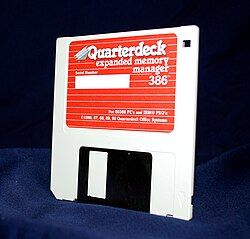
Quarterdeck QEMM
» see quarterdeck.com as it lived, on the wayback machine
~ the last words ~
i missed QEMM. by the time i was online at home in 1998 with a 14.4k modem, the dos memory war was over and the windows 95 box was the default. but every reader of pc magazines in turkey through the early 90s knew the name quarterdeck. QEMM was the famous one. you bought it because you wanted to run a screen-saver and lotus 1-2-3 at the same time, and the 640k barrier said no.
quarterdeck office systems shipped QEMM-386 v4.2 in november 1988. the product solved a problem you cannot really explain to anyone born after 2000. dos applications could only see the first 640 kilobytes of memory. above that sat a 384k zone full of holes for video bios and rom shadows. QEMM mapped that wreckage and let dos use what was left, plus everything above 1 megabyte. it shipped a feature called stealth that pulled the rom out from under the system address space so you could run quake or descent without a crash.
the product hit its commercial peak in 1993 with v7.0. after that, the wind started shifting. windows 95 launched in august 1995 with its own memory management and a protected-mode kernel that did not care about the 640k line. QEMM 97 came out in may 1997 as a swan song for the brand. one year later, on october 15, 1998, symantec acquired quarterdeck for around $65 million and the dos utility line went into the drawer marked archive. QEMM never shipped another version.
~ the record ~
| Born | November 1988 (QEMM-386 v4.2) |
|---|---|
| Peak | QEMM 97 / v9.0, May 1997 |
| Killed | October 15, 1998 (Symantec acquisition) |
| Lifespan | 10 years |
| Made by | Quarterdeck Office Systems |
| Killed by | Windows 95 and the Symantec acquisition |
~ what it actually did ~
QEMM relocated the dos kernel into upper memory, then loaded device drivers and TSRs into the same zone, freeing the low 640k for programs that needed it. it competed with microsoft emm386 and quarterdeck's own DESQview, which used QEMM underneath to multitask dos sessions before windows could do the same. the dos-up and stealth features were what serious users paid for. a hand-tuned config.sys with QEMM in it was a small kind of pride.
~ why it died ~
windows 95 made the question pointless. with a protected-mode kernel and 32-bit memory, nobody needed to count kilobytes anymore. dos extenders also crept in for games that did need the resources, doom and descent and the like, and they handled their own memory directly. by 1997 the only people paying for QEMM were nostalgia buyers and corporate dos holdouts. symantec did the math, bought the company at firesale, and shut the lights off.
~ the next chapter ~
the technical work in QEMM informed later memory tools in the linux and bsd worlds, mostly by example. the cultural memory is thinner. anyone who installed quarterdeck off a stack of floppies in 1993 and watched the dos kernel slot itself into the upper memory area remembers the moment a 286 felt like a real machine. for me it is borrowed memory. the engineer in me reads the docs and understands the architecture, but i never had to ship a config.sys that did it.
~ leave a rose ~
an anonymous tribute. one rose per visitor per day.
@}-->-- ... roses left here
~ leave a wreath ~
a rose fades by morning. a wreath stays on this grave for good, with your name on it.
from $1, paid once through stripe. it keeps the graveyard running: the hosting and the nightly digging. adopt it and the headstone reads "maintained in memory by" you. the groundskeeper plants new wreaths at the next tending, usually within a day.
» one email a week: new graves and the anniversaries of the dead. subscribe
other software: Adobe Fireworks, YUI Library, Unity Web Player, Linspire
also died in the 1990s: MILNET, Absolute Entertainment, Mercury Center
~ leave a note ~
visitors before you have left these graveside notes. anonymous welcome.