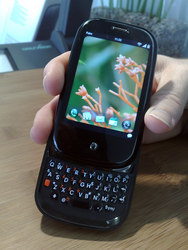
Palm Pre
» see palm.com as it lived, on the wayback machine
~ the obituary ~
the palm pre was sprint-only at the us carrier layer for the entire critical first year. that was not a meaningful product in turkey in 2009. i was already on an htc android device on turkcell by then, the carrier-bound us-exclusive launch model meant the pre was a phone i could only read reviews of, not buy. cnet picked it as best of show at ces 2009 in january, the engadget liveblog of the launch on june 6 was the closest i got to handling one.
palm announced the pre at ces in january 2009 alongside the new webos operating system. the device launched on sprint on june 6 2009 at two hundred dollars on a two-year contract. it was the first phone shipping with webos, the new linux-based mobile os palm had built to replace the aging palmos that had carried the company through the pre-iphone era. the launch was the apparent comeback moment for palm after the treo line had lost market share to the iphone since 2007.
the comeback did not stick. sales reports through the second half of 2009 came in below expectations, sprint exclusivity ended in january 2010 with a verizon launch and a february bell canada launch, the gsm pre plus did not arrive on att until may 2010. by the time the device was widely available on the major us carriers, the iphone 4 was three months from launch and the android lineup had already cleared a million daily activations a month. hp bought palm for 1.2 billion dollars in april 2010, the deal closed in july. the pre 2 launched in october 2010 on the verizon network with a faster processor, the pre 3 was announced in february 2011 but barely shipped, hp killed the entire webos hardware line on august 18 2011.
the pre was an industrial design that survived its commercial death. the pebble-shape chassis with the sliding portrait keyboard had a tactile distinctness that the iphone slab and the android candybar wave that followed never had. the webos card-stack multitasking model was the genuine innovation in the product. ios and android both ended up adopting card-style multitasking interfaces in the years after the pre died, the lineage is direct enough that the gestural-multitasking patterns in modern phones still trace back to the webos team that built the original.
~ the case file ~
| Born | June 6 2009 on Sprint as the launch device for webOS |
|---|---|
| Peak | summer 2009 launch through early 2010, sold under two million units |
| Killed | August 18 2011 (HP exited webOS hardware) |
| Lifespan | about 2 years |
| Made by | Palm Inc, later HP |
| Killed by | HP's August 2011 webOS hardware exit |
~ what was good ~
the synergy contact system was the single best feature in the product. you signed into google and exchange and facebook from a single accounts panel in os settings, and synergy merged the contact lists into one deduplicated address book. if the same person showed up in your gmail contacts and your facebook friend list, synergy collapsed them into one entry that pulled their photo from facebook and their phone from gmail. ios got something similar with the unified contacts feature in ios 5 in 2011, android took longer to catch up, the synergy model was two years ahead.
webos as an os was the other thing that worked. the card-stack metaphor for multitasking treated each running app as a physical card you could swipe up to dismiss or swipe sideways to switch between. the model was developed by a team that included a number of ex-apple human interface designers, the polish on the gestural language was on a level the rest of the mobile market did not reach for several more product cycles. the os also had the just type universal search bar before android's omnibox and before spotlight on ios got that role.
~ what was bad ~
the build quality was the part that aged worst. the slide mechanism on the keyboard developed the oreo twist after a few months of use, where the top half of the phone could rotate slightly relative to the bottom half on the slider track. the plastic screen cracked easily on a drop and the camera was below the iphone 3gs at launch. the touchstone wireless charging pad was a clever inductive accessory that worked well but did not compensate for the durability issues elsewhere.
the carrier launch strategy compounded the build problems. sprint had a smaller subscriber base than verizon or att, the us-only initial launch meant the international audience that had bought treos through the 2000s had no path to the pre during the critical first six months. by the time the verizon and att variants shipped in 2010, the launch buzz had cooled and the carrier subsidy battle had already tilted toward android. the pre had a great first month and a slow second half of 2009. hp's acquisition in 2010 was not enough to reverse the trajectory.
~ what came after ~
the webos team scattered after the august 2011 hp exit. matias duarte, who led the webos human interface group at palm, joined google in mid 2010 before the hardware exit and became the design lead for android starting with the honeycomb release on tablets. the card-stack multitasking pattern that arrived in android 4.0 ice cream sandwich in october 2011 and the app-switcher gestures in ios 11 from 2017 both trace lineage back to the webos design work matias duarte and the palm team did between 2007 and 2009.
the os itself had a longer afterlife than the phone. hp open-sourced webos as open webos in 2012, lg bought the webos team and the codebase in 2013 and shipped webos on its smart tv line starting in 2014. the lg webos tvs were still shipping in 2026. the desktop and mobile use cases that the pre and the touchpad were built around died in 2011 with the hp exit, the smart-tv codebase that kept the brand alive was a separate product on lg hardware.
~ leave a rose ~
an anonymous tribute. one rose per visitor per day.
@}-->-- ... roses left here
~ leave a wreath ~
a rose fades by morning. a wreath stays on this grave for good, with your name on it.
from $1, paid once through stripe. it keeps the graveyard running: the hosting and the nightly digging. adopt it and the headstone reads "maintained in memory by" you. the groundskeeper plants new wreaths at the next tending, usually within a day.
» one email a week: new graves and the anniversaries of the dead. subscribe
other gadgets: PocketStation, Commodore Plus/4, AIBO, Prime Computer, Inc.
~ leave a note ~
visitors before you have left these graveside notes. anonymous welcome.