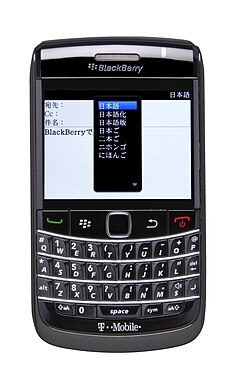
BlackBerry
» see blackberry.com as it lived, on the wayback machine
~ the goodbye ~
blackberry started as a paging device in january 1999. by 2002 it was a real smartphone with email, calendar, and a physical qwerty keyboard. through the mid-2000s it became the default phone for corporate america. lawyers had blackberries. consultants had blackberries. wall street had blackberries. obama had a blackberry as president.
the iphone shipped in june 2007. on launch day blackberry executives publicly said the iphone was not a serious threat because it lacked a physical keyboard. they were correct that the iphone in 2007 was not a great email device. they were wrong about everything else. over the next ten years the iphone and android phones systematically destroyed the smartphone market blackberry had built.
i never bought a blackberry. the shape always looked wrong to me. a tiny screen at the top with a heavy keyboard underneath, like a brick someone glued buttons to. in istanbul around 2008 i would see them in finance and law offices, where the device worked as a status object more than a phone. by the time i had real money for a good phone, the iphone existed and the blackberry was already on its decline. so i skipped the entire blackberry era and went straight from a candy-bar nokia to a touchscreen.
blackberry kept making hardware until 2016. then they licensed the brand to TCL, who made a few more devices. then to OnwardMobility, who promised an android-blackberry hybrid that never shipped. legacy services for the older devices were finally turned off on 4 january 2022. that was the end.
~ the chronicle ~
| Born | 19 January 1999 (BlackBerry 850 pager) |
|---|---|
| First real smartphone | BlackBerry 5810 (2002) |
| Peak users | ~85 million (2012) |
| Killed (hardware production) | September 2016 |
| Killed (services for legacy devices) | 4 January 2022 |
| Made by | Research In Motion (RIM), then BlackBerry Limited |
| Killed by | the iPhone, then Android, slowly |
~ the keyboard ~
the blackberry physical keyboard was the product. nothing else has matched it. the keys had perfect tactile feedback. they were positioned so your thumbs could reach every key without moving your grip. you could type faster on a blackberry than on a full-size laptop keyboard once you had practice. lawyers in 2008 could write 200-word emails in 90 seconds, single-handed, on a blackberry.
this skill has been mostly lost. modern phone typing is faster than people remember (autocorrect helps a lot) but the absolute peak speed of a blackberry user in 2010 was higher than any ios or android typist today. there are videos on youtube of blackberry typing speed competitions from 2009 that look astonishing now.
the keyboard had real costs. the screen was small because the keyboard took up half the device. multimedia was bad because the screen was bad. browsing the web was painful. blackberry made an excellent text-input device. text input was the wrong product to optimize for,.
~ the trackball / trackpad ~
early blackberries had a small physical trackball under the screen for navigation. it was tactile and precise. you scrolled by rolling it. you clicked by pressing it. later models replaced the trackball with a tiny optical trackpad, which was equally good. both were better at fine-grained navigation than any touchscreen.
this hardware quality is what blackberry was actually about. the keys felt good. the trackball felt good. the case felt good. the device made a satisfying click when you opened it. blackberry was a tool that fit your hand. modern phones are slabs of glass that do everything but feel like nothing. that absence is part of why blackberry users still mourn the platform.
~ how it died ~
the standard story is the iphone killed blackberry. that is mostly true. the deeper story is that blackberry's leadership did not understand what the iphone meant for several years.
internally, blackberry executives kept arguing that the keyboard was a permanent moat. their corporate customers had told them they needed the keyboard. they assumed the corporate customer base would not migrate. when the iphone got better at email (around 2010) and android shipped reasonable corporate management features, the corporate audience moved fast. by 2012 blackberry's market share had collapsed from over 50 percent of US smartphone sales to under 10.
blackberry tried touchscreen devices (the storm series) and they were terrible. they tried a new operating system (BB10) in 2013 and shipped good hardware that came too late. they pivoted to security software for enterprises and have been mostly profitable doing that ever since, but the consumer hardware business never recovered.
~ what we lost ~
the physical keyboard. nothing on the market in 2026 has a comparable physical keyboard for typing fast emails one-handed. several niche manufacturers have tried (planet computers, unihertz titan, fxtec pro 1). none have matched the blackberry feel. the engineering for a great pocket-sized keyboard has been mostly lost.
the corporate cohesion. for a brief window, every executive in your industry had the same phone. you knew the same shortcuts. you compared the same complaints. modern smartphones are personal choice. corporate phone provisioning is largely byod (bring your own device). the cohesion is gone.
the blackberry pin. BBM, the messenger that ran on the platform, depended on the blackberry hardware ecosystem. when blackberry hardware died, BBM lost its captive audience and eventually died too (see the BBM grave). that whole texture of "exchange your blackberry pin" social moment is also gone.
~ leave a rose ~
an anonymous tribute. one rose per visitor per day.
@}-->-- ... roses left here
~ leave a wreath ~
a rose fades by morning. a wreath stays on this grave for good, with your name on it.
paid once through stripe. payments are handled by OÜ Lakeview, the small company that keeps rip.so running. the money pays for the hosting and the nightly digging. adopt it and the headstone reads "maintained in memory by" you. the groundskeeper plants new wreaths at the next tending, usually within a day.
» one email a week: new graves and the anniversaries of the dead. subscribe
other gadgets: Ensoniq, Kenbak-1, Inmos, Power Computing
also died in the 2020s: Lonely Planet Thorn Tree, Vodkaster, Order & Chaos 2: Redemption
~ leave a note ~
visitors before you have left these graveside notes. anonymous welcome.