Java Applets
» see java.com as it lived, on the wayback machine
~ the eulogy ~
i learned java in 2003 at university, partly because applets were still a thing on course websites. the simulation labs ran inside a browser tab. you got the same gray loading rectangle and the same coffee-cup logo every time. you waited eight to fifteen seconds for the jvm to warm up, and then a 2d physics demo or a finite automaton visualizer would draw itself in a 600 by 400 box. that was a real way to ship interactive software in 1998. by the time i graduated it was already a way to ship interactive software in 1998.
sun shipped applets in 1995 with the first cut of java, originally as the demo that proved the platform was useful. write once, run anywhere. compile to bytecode and deliver inside an html page. the early ones were impressive. you could see full game prototypes and cad-style demos in a browser tab years before flash could match the visuals. then ie3 added vbscript and ie4 added activex on the microsoft side, while netscape added javascript on its own. the browser itself slowly became capable enough to host the same content without an external runtime.
the long deprecation took twenty years. mobile platforms never supported applets, so when the web shifted to phones around 2010 the writing was already on the wall. chrome turned off npapi in september 2015 and firefox followed two years later. java 9 deprecated the applet api the same year as firefox, with java 17 marking it for removal in 2021. java 26, in early 2026, finally pulled the api out for good. by then nobody was running applets except a few enterprise vpn portals that kept paying for legacy java.
~ the dossier ~
| Born | 1995, with the first cut of java |
|---|---|
| Peak | late 90s through around 2005 |
| Killed | java 9 deprecation, september 2017 (browsers pulled npapi 2015) |
| Lifespan | around 22 years |
| Made by | sun microsystems, then oracle |
| Killed by | npapi removal, security cves, javascript catching up |
~ what they actually did ~
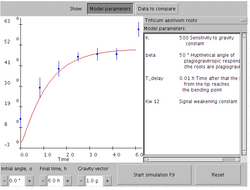
applets were the closest thing to a "web app" before javascript could carry one. nasa shipped a 3d earth viewer called world wind that ran inside a browser. universities shipped chemistry and physics simulations as applets because lecturers could update one file on a server and every student got the new version. games were a distinct subgenre, with chess clients and tile-based puzzle games that loaded slow but ran fine once warmed up.
~ the security spiral ~
the security model was the part that broke. applets ran in a sandbox but the sandbox boundary was complicated, and through the late 2000s a long list of escape vulnerabilities accumulated. mac users were hit by the flashback malware in 2012, which used a java applet vector. by 2013 every major browser was popping a "this plugin is unsafe" interstitial whenever an applet tried to load. the technology had become a pure liability with no remaining upside.
~ what it left ~
java the language survived completely intact. it just stopped trying to live in a browser. modern java code lives on servers and inside android. enterprise stacks still treat it as the default backend. the applet was always the front-end veneer that proved the platform was portable, and once portability stopped meaning "runs in a browser tab" the veneer was no longer useful. the gray loading rectangle is the part most people remember.
~ leave a rose ~
an anonymous tribute. one rose per visitor per day.
@}-->-- ... roses left here
~ leave a wreath ~
a rose fades by morning. a wreath stays on this grave for good, with your name on it.
from $1, paid once through stripe. it keeps the graveyard running: the hosting and the nightly digging. adopt it and the headstone reads "maintained in memory by" you. the groundskeeper plants new wreaths at the next tending, usually within a day.
» one email a week: new graves and the anniversaries of the dead. subscribe
other software: Adobe FormsCentral, Traf-O-Data, Project Looking Glass, Aviary
also died in 2015-2019: Adobe FormsCentral, Aviary, Lokalisten
~ leave a note ~
visitors before you have left these graveside notes. anonymous welcome.