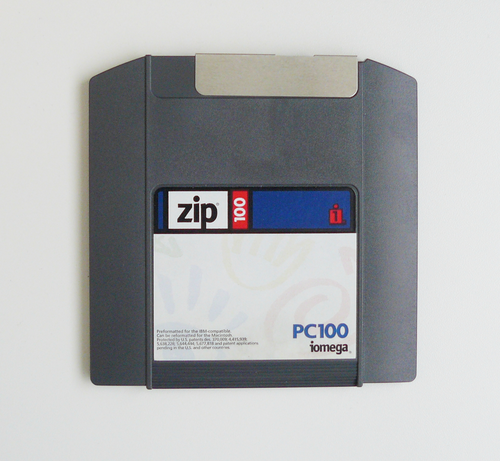
Iomega Zip Disk
» see iomega.com as it lived, on the wayback machine
~ the goodbye ~
the zip drive was a fat 3.5-inch floppy with a hundred megabytes inside. that was a hundred times what a regular floppy held in 1995, and it landed at the exact moment people were starting to ship multimedia cd-roms back and forth. iomega sold the drive cheap and made the money on the disks. for about three years the math worked. a zip disk in a brown sleeve was the way you carried a finished design job to a print shop, or a dissertation chapter to a thesis advisor.
zip's peak years overlap with my dial-up era, but the drive itself sat on the wishlist side of every turkish hardware magazine i read at the time. you saw it in computer labs at universities, and in catalogs from local resellers. you did not see it in the average household machine, because a parallel-port zip 100 plus a stack of disks cost more than the rest of a teenager's peripherals combined. the cheaper move was a cd burner once those dropped under fifty dollars, which they did the year iomega's sales started declining.
then the click of death happened. a class action filed in september 1998 alleged that some zip drives developed a head misalignment that would also damage every disk they touched, and the failing drive made an audible click as it kept retrying. the noise became its own folk story. iomega settled, but the cultural damage was the part that lasted. the brand never recovered the trust it had between 1996 and 1998.
~ the chronicle ~
| Born | March 1995 (Iomega Zip 100) |
|---|---|
| Peak | around 50 million drives sold by the late 90s |
| Killed | discontinued by 2003 |
| Lifespan | 8 years on shelves |
| Made by | Iomega |
| Killed by | cheap CD-R, then USB flash drives |
~ the breakout ~
the zip 100 came out at a moment when floppy disks were obviously inadequate and cd-r drives were still expensive. iomega ran the razor-and-blades model harder than any other peripheral company of the era. drives were under two hundred dollars. the disks were ten dollars each, and you needed a stack of them to do anything serious. by the late 90s iomega had sold tens of millions of drives.
the 250mb version arrived in 1998, the 750mb in 2002. neither hit the same penetration as the original 100. by then the market had figured out that a fifty-cent cd-r could hold seven zip-100 disks worth of data, and a usb stick was about to make the whole removable-media question obsolete.
~ the click of death ~
the actual fault was a head crash that propagated. a single drive with worn heads could ruin every disk it touched, and a contaminated disk inserted into a healthy drive could damage that drive too. the failure mode was the worst possible architecture for a removable-media format whose entire pitch was sneakernet trust. you could lose a year of work to one bad drive in someone else's office.
the lawsuit settled in 2001. iomega offered free repairs and discounted replacements. the noise itself, that little clicking sound a zip drive made when it was about to take your data with it, ended up doing more damage than any class-action settlement. by the time the settlement papers were signed, cd burners were standard and zip was already coasting downhill.
~ the long tail ~
zip disks kept showing up in odd places. aviation databases shipped on zip media for navigation systems into the 2010s, because the avionics that read them had been certified once and nobody wanted to recertify a usb interface. some print shops kept a zip drive plugged in well past 2005 for the same reason: there was a stack of customer files in the format. iomega itself was acquired by emc in 2008 and then folded into lenovo's storage line, which is the corporate equivalent of being filed.
~ leave a rose ~
an anonymous tribute. one rose per visitor per day.
@}-->-- ... roses left here
~ leave a wreath ~
a rose fades by morning. a wreath stays on this grave for good, with your name on it.
from $1, paid once through stripe. it keeps the graveyard running: the hosting and the nightly digging. adopt it and the headstone reads "maintained in memory by" you. the groundskeeper plants new wreaths at the next tending, usually within a day.
» one email a week: new graves and the anniversaries of the dead. subscribe
~ epitaphs from visitors ~
"from SCSI to USB I owned so many versions of this. Always loved them"
left by cb_desu, 2026-07-12
other media formats: MetroCard, Flexplay (EZ-D), LightScribe, Bernoulli Box
also died in the 2000s: Sony eyeVio, first-e, Mac OS 9
~ leave a note ~
visitors before you have left these graveside notes. anonymous welcome.