Fidelity Electronics
~ the obit ~
Fidelity Electronics was founded in Chicago in 1959 and spent its first seventeen years in a business with no connection whatsoever to chess. It imported hearing aids from Viennatone of Austria and moved on into medical equipment, eventually as far as myoelectric prostheses. Sidney Samole joined as a department head in 1968. He and Myron Samole bought every share in March 1970, when the payroll ran to about thirty-five people.
The turn came from television. Samole watched Spock play chess against the ship's computer on Star Trek in 1976 and decided the thing should exist for real. His secretary's partner, Ronald Nelson, happened to be writing a chess program in his own time. Nelson was hired, and he went on to write the programs for the first machines. Chess Challenger reached the American market in January 1977 at a Chicago trade fair. It ran an 8080 with two kilobytes of ROM, and it would only play Black at a single difficulty level. About a thousand of them sold at roughly six hundred dollars, though the source for both of those numbers hedges them.
What followed was a decade in which a Miami company that had started in hearing aids beat the academic programs that turned up to play it. Fidelity machines won the first four World Microcomputer Chess Championships, running from London in 1980 to Glasgow in 1984. At Budapest in 1983 the Elite A/S scored six points out of seven. The Glasgow result deserves an asterisk, since four machines tied on five points there and the commercial title that year went to a Mephisto.
I came to chess on a screen, so none of this was ever an object I wanted. My first opponent was a program among other programs, something you could lose to and then minimize. The Fidelity proposition was the opposite of that. One box that did one thing, sitting on the table and always awake, so that playing a game never again required a second person to be in the room.
~ the rap sheet ~
| Born | 1959 in Chicago, importing hearing aids from Austria |
|---|---|
| Peak | the first four World Microcomputer Chess Championships, 1980 to 1984 |
| Killed | end of 1992 |
| Lifespan | 33 years |
| Made by | Fidelity Electronics of Miami, under Sidney Samole |
| Killed by | Hegener and Glaser shutting the US operation it had bought |
~ better living through science ~
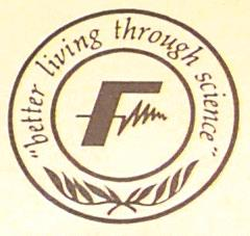
Those four words are not my summary of the company. They are what it printed on its own logo, in quotation marks, wrapped around an F with a waveform through it and a laurel wreath underneath. It is a hearing-aid firm's motto, written for audiometry and prosthetics, and Fidelity kept it on the roundel through the whole decade in which it sold the most famous chess computers in the world.
~ the people who wrote the moves ~
Ron Nelson wrote the programs for the first Challenger and for several machines after it, working the hardware alongside the software, and he hand-built the Elite Avantgarde V10 himself. The other half of the house was Dan and Kathe Spracklen, who had written Sargon 2.5 for Applied Concepts before they arrived. Their first official Fidelity program shipped in the Sensory Champion in the autumn of 1981, and they stayed more than nine years.
Fidelity's commercial peak is usually pinned on the Chess Challenger 7, which collectors and specialist wikis put at around six hundred thousand units. I could not get to the underlying source for that figure, so treat it as the number everyone repeats rather than one anybody has shown me.
~ the sale, and then the closing ~
On 14 September 1989 Hegener and Glaser announced from Munich that it had bought the company, calling the deal an elephant wedding in the chess-computer trade. A letter from a Miami law firm to creditors put the asset transfer at 1 September and the price at four and a half million dollars, a figure Samole disowned; the price generally given is seven million, which the German account puts at about four times Fidelity's annual profit. Revenue at that point was around ten million dollars a year.
The sale was not the ending, which is why 1989 is the wrong year to carve on this. Fidelity continued in the United States as its own company under Samole until he left the management in July 1991. A Hegener and Glaser board member took over in Miami and was dismissed the following spring. At the end of 1992 the American operation was closed, at a cost to the German parent of twenty-eight million marks. Hegener was careful to say in public that this was not a bankruptcy, and that the Fidelity rights had passed to an American firm he named as Quantum, a claim I could find nowhere else and would not build anything on.
Hegener and Glaser filed for composition proceedings on 28 January 1993 and Saitek took a majority of it a year later, on 19 January 1994, keeping Mephisto and leaving the Fidelity name where it had fallen. Sidney Samole died on 30 July 2000 at sixty-five. His son had already started Excalibur Electronics in 1992, selling the same kind of machine under a different name, which is as close as the lineage gets to continuing.
~ leave a rose ~
an anonymous tribute. one rose per visitor per day.
@}-->-- ... roses left here
~ leave a wreath ~
a rose fades by morning. a wreath stays on this grave for good, with your name on it.
paid once through stripe. payments are handled by OÜ Lakeview, the small company that keeps rip.so running. the money pays for the hosting and the nightly digging. adopt it and the headstone reads "maintained in memory by" you. the groundskeeper plants new wreaths at the next tending, usually within a day.
» one email a week: new graves and the anniversaries of the dead. subscribe
other gadgets: Sperry Corporation, Crypto AG, Apple AirPower, Jibo
also died in the 1990s: Compunet, Electronika BK, SoftKey
~ leave a note ~
visitors before you have left these graveside notes. anonymous welcome.