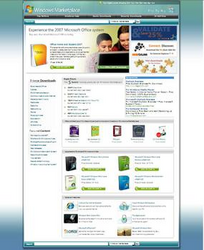
Windows Marketplace
» see marketplace.windows.com as it lived, on the wayback machine
~ the obituary ~
microsoft tried to build a windows app store in 2004, three years before the app store existed. i was in university then, running windows xp on a ttnet-connected desktop, and my mental model of "getting software" was the same as everybody else's: download an installer from the developer's own website. maybe from a magazine coverdisc if you had one. i had no reason to check marketplace.windows.com and i do not remember anyone i knew doing so either.
windows marketplace launched on 12 october 2004 after being announced in july. more than 93,000 products at launch, cataloged by category and price, browsable in a web storefront. the point was not that you bought software directly from microsoft. it was that microsoft was hosting a directory pointing at third-party download links and taking a cut on transactions where the developer had opted into microsoft's payment processing.
by 2006 the catalog had grown past 150,000 products. the digital-locker system, tied to your windows live id, let you re-download software you had already licensed without paying again. that was actually forward-thinking, apple's app store did not ship until 2008 and steam's software category was still years away. really though, the wider windows-using world just kept downloading installers from the vendor's website.
~ the case file ~
| Born | 12 October 2004, Microsoft |
|---|---|
| Peak | over 150,000 products cataloged by 2006 |
| Killed | 14 November 2008 by Microsoft |
| Lifespan | about 4 years |
| Made by | Microsoft |
| Killed by | consolidation into Microsoft Store then Windows Store |
~ what it was ~
the storefront ran as a web catalog rather than as an installed client. you visited marketplace.windows.com and browsed the catalog by category. picking anything ran you through a checkout flow tied to your windows live id. the actual download often came from the developer's servers rather than microsoft's, marketplace was closer to a search-and-billing layer than a distribution one.
the certified "designed-for-windows" program was the differentiator microsoft leaned on. really though, marketplace prominently displayed compatibility badges for windows xp and later vista, and the catalog included the first downloadable versions of windows vista itself and microsoft office. that was the first time a full windows os was purchasable and downloadable through a microsoft-run storefront.
~ how it ended ~
14 november 2008 was the retirement announcement. microsoft split the concept into pieces. the software directory got folded into what became microsoft store. the digital-locker function got absorbed into windows live services. the marketplace domain kept redirecting for a while but the storefront itself was gone.
what killed it was that no one had used it much. really though, marketplace had never dented the actual pattern of getting windows software, which was downloading installers from the developer's website. developers who did list on marketplace did so mainly to be indexed, not for revenue. by 2008 microsoft had also seen the apple app store launch and realized the model needed to be a first-party installed client rather than a web catalog.
~ the long tail ~
the concept did not die with the brand. microsoft rebooted the store idea in 2011 as the windows store for windows 8, this time as an installed metro-app-integrated storefront with sandboxed installs and background updates. that store has been renamed several times since, most recently microsoft store on windows 10 and 11, but the underlying model traces back to the 2004 marketplace attempt.
what died with the original windows marketplace was the assumption that a web catalog could be a plausible way to distribute pc software at scale. that assumption was already wrong in 2004. apple's shift to a first-party client-side store in 2008 exposed how wrong. every subsequent store on every platform has been a native app, not a website. windows marketplace was the last serious attempt at the alternative.
~ leave a rose ~
an anonymous tribute. one rose per visitor per day.
@}-->-- ... roses left here
~ leave a wreath ~
a rose fades by morning. a wreath stays on this grave for good, with your name on it.
from $1, paid once through stripe. it keeps the graveyard running: the hosting and the nightly digging. adopt it and the headstone reads "maintained in memory by" you. the groundskeeper plants new wreaths at the next tending, usually within a day.
» one email a week: new graves and the anniversaries of the dead. subscribe
other online services: Windows Marketplace for Mobile, Drizly, Wavii, Bildschirmtext (BTX)
also died in the 2000s: Be Inc., DriveSpace, Adobe FlashPaper
~ leave a note ~
visitors before you have left these graveside notes. anonymous welcome.