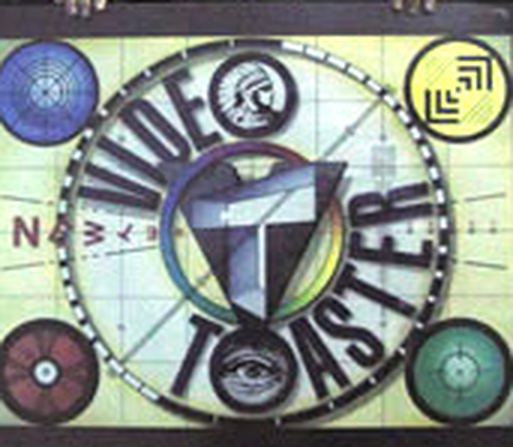
Video Toaster
» see newtek.com as it lived, on the wayback machine
~ the last words ~
the video toaster was an amiga product for american television, and in december 1990 i was six years old in turkey. this one is out of reach on every axis available, wrong decade and wrong machine both. i am writing it because it is one of the few pieces of hardware from that era whose absence from the list is genuinely strange.
newtek was founded in 1985 in topeka, kansas by tim jenison and paul montgomery, which is not where you expect broadcast equipment to come from. the toaster was announced at the world of commodore expo in 1987 and did not ship until december 1990, a gap long enough that most people had stopped believing in it. what arrived was a card that filled the amiga 2000's single dedicated video slot, with four bnc inputs on the back and two outputs.
the reason it worked at all was a coincidence of clock speeds. the amiga ran at 7.158 megahertz, exactly twice the ntsc color carrier frequency of 3.579, so the machine could lock to a broadcast video signal without anyone having to build expensive hardware to make it happen. the amiga was not designed for this. it just happened to be the only home computer in the world that could do it.
~ the record ~
| Born | December 1990, for the Amiga 2000, $2,399 |
|---|---|
| Peak | 1993, an Emmy for technical achievement |
| Killed | August 2012 |
| Lifespan | twenty-one years |
| Made by | NewTek of Topeka, Kansas |
| Killed by | Commodore going bankrupt, then NewTek's own TriCaster |
~ what it made possible ~
the price is the entire argument. a grass valley switcher that could do comparable work cost around a hundred thousand dollars, and a complete turn-key toaster system, computer included, ran about five thousand. that difference created an industry of small production houses that had not existed the year before, in the same way the macintosh had created desktop publishing a few years earlier. wired went to see them in 1994 and the piece is still the best record of what that felt like.
bundled with the card was lightwave 3d, a modeling and animation package that turned out to be worth more than the hardware. it was spun out as a standalone product in 1994. babylon 5 rendered its space sequences on lightwave for the first three seasons and seaquest did its submarine exteriors the same way. the tonight show used the toaster itself for sketch effects. a technical emmy followed in 1993.
~ how it actually ended ~
commodore went bankrupt in 1994, which removed the platform from under the product. newtek moved the toaster to windows, where it survived as the vt line without the thing that had made it remarkable, since on a pc it was one video card among many rather than the only way in. the amiga source code was released in 2004. by 2009 newtek's attention had gone to the tricaster, a self-contained box that did the same job without asking anyone to open a computer.
the discontinuation of vt[5] was announced in december 2010, which ended the toaster as something you could buy on its own. tricasters built on the old platform were still made until august 2012, when the tricaster studio was replaced by a model with nothing of the toaster left in it. newtek itself was bought by vizrt on 1 april 2019 for ninety-five million dollars. newtek.com still answers today and the video toaster page on it returns a 404.
~ leave a rose ~
an anonymous tribute. one rose per visitor per day.
@}-->-- ... roses left here
~ leave a wreath ~
a rose fades by morning. a wreath stays on this grave for good, with your name on it.
from $1, paid once through stripe. it keeps the graveyard running: the hosting and the nightly digging. adopt it and the headstone reads "maintained in memory by" you. the groundskeeper plants new wreaths at the next tending, usually within a day.
» one email a week: new graves and the anniversaries of the dead. subscribe
other gadgets: Apple eMate 300, Handspring, PrairieTek, ePods
also died in 2010-2014: Kosmix, JXTA, Infantry Online
~ leave a note ~
visitors before you have left these graveside notes. anonymous welcome.