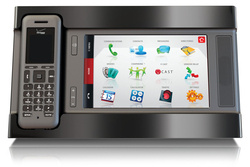
Verizon Hub
» see verizon.com/hub as it lived, on the wayback machine
~ the obit ~
the verizon hub was verizon-only at the us carrier layer and existed for eight months. you bought a $200 tabletop phone with a 7 inch touchscreen, signed a $35 a month plan, and got a voip handset plus a small panel of widgets covering traffic plus weather plus calendar plus messaging to other verizon mobile numbers. it never shipped outside the united states. the entire product was an in-home companion to a verizon mobile subscription, sold through verizon stores to verizon customers.
i was on turkcell at the time and watching the iphone 3g get its first turkish carrier deal that year. the idea of a tethered tabletop device whose entire connective fabric was a single us carrier read in europe and turkey as a product from a different telecom universe. the hub was built around an openpeak reference design, the same hardware platform at&t was planning to use for its own home media phone before the at&t version was killed pre-launch. it had a custom linux os, 128mb of ram, and 64gb of internal storage.
the launch press in january and february 2009 was warm in the way technology press is warm for any new touchscreen device, and skeptical about the price the moment anyone did the math. $200 upfront plus $35 a month plus a verizon mobile account you already had bought you a panel of widgets your iphone or blackberry could already show you, fixed to a kitchen counter. the form factor was good for a 2003 conception of the connected home. by 2009 the same use case was already migrating into the smartphone that was sitting on the same counter.
~ the rap sheet ~
| Born | February 1, 2009 in the US on Verizon |
|---|---|
| Peak | spring 2009 launch period, no public sales figures ever released |
| Killed | October 8, 2009 |
| Lifespan | about 8 months |
| Made by | Verizon Communications, hardware sourced from OpenPeak |
| Killed by | the $200 hardware plus $35 a month fee versus a smartphone that did all of it portable |
~ how it landed ~
verizon stores reported soft sales within months of launch. the hub was pulled from physical retail by mid 2009 and moved to online-only ordering, which is the move a carrier makes when a product has stopped justifying the shelf space. customer reviews flagged a specific irritation, the hub would make you watch an ad video before you could pull up the traffic widget that was part of the package you were already paying $35 a month for. verizon announced the official discontinuation on september 29, 2009 with an october 8 sunset date for new sales.
~ the actual end ~
the existing units kept working for a while on the back-end service. verizon eventually stopped supporting the hub entirely and the devices became expensive plastic bricks with a dead touchscreen. openpeak, the hardware vendor, briefly tried to license the platform to other carriers after the verizon failure, and at&t ran a similar but smaller pilot the next year before that was also killed. the broader category of the carrier-tied home tablet died with the hub and never had a second wave. by 2010 the consumer home-screen device that did this kind of job had already been redefined as the ipad, which was the same form factor without the verizon-store distribution model or the $35 a month tax.
~ leave a rose ~
an anonymous tribute. one rose per visitor per day.
@}-->-- ... roses left here
~ leave a wreath ~
a rose fades by morning. a wreath stays on this grave for good, with your name on it.
from $1, paid once through stripe. it keeps the graveyard running: the hosting and the nightly digging. adopt it and the headstone reads "maintained in memory by" you. the groundskeeper plants new wreaths at the next tending, usually within a day.
» one email a week: new graves and the anniversaries of the dead. subscribe
other gadgets: Trident Microsystems, Apple iPod Hi-Fi, Zano, Philips CD-i
also died in the 2000s: Impressions Games, SoftICE, Apple iPod Hi-Fi
~ leave a note ~
visitors before you have left these graveside notes. anonymous welcome.