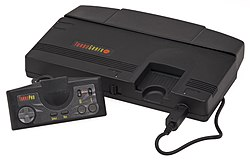
TurboGrafx-16
~ the goodbye ~
the turbografx never reached turkey at meaningful scale. by the time i was old enough to want a console, sega and nintendo had already taken the western market, and nec had stopped making the system. as far as i knew growing up, "the console wars" were the genesis and the snes. the pc engine was a japanese rumor that arcade-emulator forums talked about a decade later.
nec and hudson soft launched the pc engine in japan on october 30 1987 and the rebranded turbografx-16 in north america on august 29 1989. it was technically the first sixteen-bit-class home console to ship, beating the genesis to japan by a year and outselling nintendo in tokyo briefly in the late eighties. by 1995 nec had moved about 6.6 million base units worldwide, with 5.8 million in japan alone. the cd-rom variants added another 1.9 million. north america took a small fraction of that, europe almost nothing.
the us launch story is the one everybody remembers. nec bundled the system with keith courage in alpha zones, an obscure hudson title nobody had heard of. sega had launched the genesis two weeks earlier with altered beast, which american kids had at least seen at the arcade. nec priced the turbografx at $199 against the genesis's $189 and gave it fewer launch titles. by the time sonic the hedgehog arrived in 1991 the war was already over.
~ the chronicle ~
| Born | october 30 1987 as pc engine in japan, august 29 1989 as turbografx-16 in north america |
|---|---|
| Peak | around 5.8 million units in japan, 6.6 million worldwide by 1995 plus 1.9 million cd-rom units |
| Killed | 1994 when nec exited the console business |
| Lifespan | about 7 years |
| Made by | nec and hudson soft |
| Killed by | marketing spend that lost to sega in north america, and a late western release |
~ the breakout ~
in japan the pc engine ran the table for two years. it had a small attractive hardware design and a hucard format that made games the size of credit cards. the cd-rom add-on of 1988 was the first of its kind on any home console. bonk, r-type, ys, snatcher, splatterhouse, dracula x. the japanese library is what kept the platform alive in collector culture long after the us version died.
~ why it failed in the west ~
the system lost north america at the marketing layer. nec spent against sega in only a few cities, leaving most of the country to associate "16 bit" with genesis and later snes. the cd add-on cost as much as a second console, and the turbo expansion ports were a confusing matrix of accessories. by the time japanese rpgs like ys book i and ii were translated, the audience had moved on.
~ the long tail ~
the pc engine mini shipped in 2020 as a $99 plug-and-play with most of the japanese library preloaded, and it sold out faster than nec ever managed with the original hardware. retro forums treat the pc engine library as one of the great closed canons in console history, full of games that never left japan and never will officially. the turbografx version of the same console is mostly remembered for the bundle-with-keith-courage story and the late-eighties magazine ads that overpromised in capital letters.
~ leave a rose ~
an anonymous tribute. one rose per visitor per day.
@}-->-- ... roses left here
~ leave a wreath ~
a rose fades by morning. a wreath stays on this grave for good, with your name on it.
from $1, paid once through stripe. it keeps the graveyard running: the hosting and the nightly digging. adopt it and the headstone reads "maintained in memory by" you. the groundskeeper plants new wreaths at the next tending, usually within a day.
» one email a week: new graves and the anniversaries of the dead. subscribe
other gaming: WildStar, Neversoft, Phantasy Star Online, 3DO Interactive Multiplayer
also died in the 1990s: Shiva Corporation, Video On Line, 3DO Interactive Multiplayer
~ leave a note ~
visitors before you have left these graveside notes. anonymous welcome.