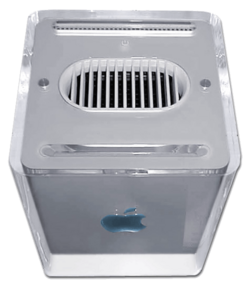
Power Mac G4 Cube
~ the obit ~
in 2000 i was sixteen and on a 56k modem. the g4 cube cost about $1,799 and ran an os i had never seen in person. it was the kind of object you saw in computer-magazine spreads at a kitapçı, then never anywhere else. for the year and a half it existed, the cube was the most-photographed mac in the world, but in turkey you mostly read about it.
apple announced the cube on july 19 2000 and suspended production on july 3 2001. that is twelve months. somewhere around 150,000 units shipped, against an internal projection of three times that. tim cook called it "a spectacular failure" years later. steve jobs had wanted a machine "between the imac and the power mac" and ended up with one that cost as much as a power mac while offering less expansion than an imac. it shipped with hairline cracks in the acrylic that became its own pr story.
the design itself is in the moma permanent collection. jonathan ive's team built an eight-inch transparent acrylic cube that pulled cool air up through its base. it had no fan. the slot-loading dvd faced upward, like a slice of bread coming out of a toaster. nothing else looked like it. nothing else apple has shipped since has looked like it either.
~ the rap sheet ~
| Born | july 19 2000 at $1,799 |
|---|---|
| Peak | about 150,000 units shipped, moma permanent collection slot |
| Killed | july 3 2001 by suspended production announcement at macworld new york |
| Lifespan | 12 months |
| Made by | apple computer |
| Killed by | a price point between two better-positioned macs and a cracking-acrylic pr cycle |
~ the cracks ~
the actual cracks were small hairlines in the molded acrylic, almost cosmetic, but they appeared on a product whose entire value proposition was the object as art. apple insisted the cracks were intentional "mold lines." reviewers were not convinced. once the los angeles times ran a piece titled "imperfect cube," the conversation flipped from "beautiful machine" to "expensive machine with quality issues."
~ the postmortem ~
the cube had no expansion bays and no agp slot worth using. it was a g4 tower with the personality and the price of one, minus the boring upgrade path that justified the cost. by mid 2001 apple was selling cubes at a discount that made the math even worse. cancellation came at macworld new york in july 2001 as a "suspended production" note. it never resumed.
~ what survived ~
every later apple object that prized form over upgradability owes the cube its founding receipt. the mac mini took the small-volume mac role and made it affordable. the trash-can mac pro of 2013 took the form-as-statement role and made it equally hard to expand. apple's pattern of building beautiful low-serviceability computers has a cube-shaped origin point in the design library, sitting on the same shelf as the lisa in the museum of jonny ive's first decade.
~ leave a rose ~
an anonymous tribute. one rose per visitor per day.
@}-->-- ... roses left here
~ leave a wreath ~
a rose fades by morning. a wreath stays on this grave for good, with your name on it.
from $1, paid once through stripe. it keeps the graveyard running: the hosting and the nightly digging. adopt it and the headstone reads "maintained in memory by" you. the groundskeeper plants new wreaths at the next tending, usually within a day.
» one email a week: new graves and the anniversaries of the dead. subscribe
other gadgets: Makani, Number Nine Visual Technology, Siemens Mobile / BenQ-Siemens, General Instrument
also died in the 2000s: GP32, AllAdvantage, Kakuto Chojin: Back Alley Brutal
~ leave a note ~
visitors before you have left these graveside notes. anonymous welcome.