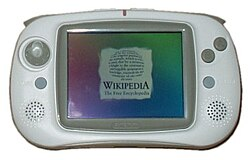
GP32
» see gamepark.co.kr as it lived, on the wayback machine
~ the eulogy ~
the GP32 was a 32-bit handheld released by Game Park in South Korea on 23 November 2001. it ran on a 133 MHz ARM9 chip with a 320x240 reflective LCD and a SmartMedia card slot for games. the firmware was custom and tolerated homebrew binaries from the start.
commercial sales were tiny. by the end of 2007 the lifetime total was around 32,000 units. there was a limited European launch in mid-2004 through distributors in Portugal, Spain, Italy, the UK, and Sweden, but no US release and no formal distribution in Turkey. for most of the GP32's life, owning one outside Korea meant importing the device, the games, and the SmartMedia cards through a small import shop or a forum trade.
i missed it entirely. in 2001 i was a high school student in Ankara learning C on a desktop, and the only handhelds anyone around me carried were Game Boy Advances. the GP32 was a name i saw years later in emulator-scene threads, where it showed up as the device that ran SNES and Genesis ports better than its specs should have allowed. by then Game Park had already split into two companies and the GP2X was the new object of attention.
~ the dossier ~
| Born | 23 November 2001 in South Korea |
|---|---|
| Peak | around 32,000 units worldwide by 2007 |
| Killed | 2005, discontinued in favor of GP2X |
| Lifespan | about four years on shelves |
| Made by | Game Park, Seoul |
| Killed by | tiny distribution, low sales, internal split that produced GP2X |
~ how it landed ~
Game Park's pitch was simple: an open handheld where the homebrew scene was a feature, not a violation. registered developers could download a free SDK and publish to the official site. emulator authors took the offer seriously, and within two years the GP32 had working ports of NES, SNES, Master System, Genesis, Game Boy, and a partial PlayStation 1 attempt.
the official commercial library never caught up. retail games were scarce and not exported in any volume. for most owners the GP32 was an emulator machine first and a Korean RPG machine second. the homebrew library outweighed the commercial one before the device was three years old.
~ what it left ~
Game Park split in 2005. one half became GamePark Holdings and shipped the GP2X later that year, which carried the same open-development pitch with a faster chip and an SD card slot. the other half tried the GP32 Xtreme refresh and faded. the GP2X line ran through the Wiz and the Caanoo, and then the entire category was absorbed by smartphones running RetroArch.
the GP32 itself stays interesting because it proved that a hardware vendor could ship a small device, hand the SDK away, and let the community write most of the software. the device sold poorly and the company collapsed, but the playbook survived. every later open handheld, from the Pandora to the Anbernic clones, traces a line back to a 133 MHz ARM machine that almost nobody owned.
~ leave a rose ~
an anonymous tribute. one rose per visitor per day.
@}-->-- ... roses left here
~ leave a wreath ~
a rose fades by morning. a wreath stays on this grave for good, with your name on it.
from $1, paid once through stripe. it keeps the graveyard running: the hosting and the nightly digging. adopt it and the headstone reads "maintained in memory by" you. the groundskeeper plants new wreaths at the next tending, usually within a day.
» one email a week: new graves and the anniversaries of the dead. subscribe
other gaming: Sodaplay (SodaConstructor), Assassin's Creed Identity, LucasArts, Kakuto Chojin: Back Alley Brutal
also died in the 2000s: Power Mac G4 Cube, AllAdvantage, TurboNick
~ leave a note ~
visitors before you have left these graveside notes. anonymous welcome.