Nokia Data
~ the last words ~
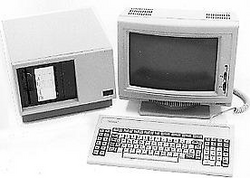
Nokia announced its first desktop computer on 29 September 1981, which in Finland is Mikko's name day, and called the machine MikroMikko. The name was built out of micro computer: take the first syllables, get Micco, and in Finnish that reads as Mikko. The machine ran an Intel 8085 at 3.072 MHz with 64 kilobytes of RAM. Its display was a 12 inch green screen giving 25 lines of 80 characters, and the operating system was Nokia's own build of CP/M 2.2. In 1984 the two drive model was listed at 30,000 markka.
Nokia had been in electronics and minicomputers before that, but MikroMikko is where it entered the office desktop market and the line stayed aimed there. MikroMikko 2 arrived in 1983 on an 80186 with up to 768 kilobytes of memory and a 15 inch screen. MikroMikko 3 followed in 1986 on an 80286 at 47,950 markka. Ergonomics was the pitch the whole way through, and from 1985 the machines came out of a purpose built computer plant at Kilo, in Espoo.
The name Nokia Data only exists from 1988. That year Nokia bought Ericsson Information Systems, the unit carrying what had been the Datasaab computer business, and merged it with Nokia Information Systems. Nokia held 80 percent of the result and Ericsson kept 20. Sources disagree on when it legally took effect, putting it somewhere between the start of 1988 and 31 March. Three years later Nokia sold the whole thing.
~ the record ~
| Born | 29 September 1981, with the MikroMikko 1 |
|---|---|
| Peak | 1988, after buying Ericsson Information Systems, with Ericsson left holding 20 percent |
| Killed | end of September 1991, merged into ICL |
| Lifespan | 10 years of Nokia desktops, 3 under the Nokia Data name |
| Made by | Nokia, out of Nokia Information Systems in Espoo |
| Killed by | Nokia deciding it was not a computer company |
~ the name day ~
Finnish name days are printed in every calendar, so launching a computer called Mikko on Mikko's day is the kind of move a national champion makes at home. The machines went into Finnish offices with Finnish keyboards and Finnish manuals. The configuration list was enormous for one product line: MikroMikko 2 shipped in twenty two variants with codes like M13A and M35D, separated only by drive count and memory size.
MikroMikko 1 predates me by three years, and the people buying it were Finnish office procurement departments. What travels is the ending. A national electronics champion decided computers were not its business and sold the division to a foreign owner who kept the local badge on the box, so Finnish offices went on buying MikroMikkos for years after Nokia stopped making them.
~ what the merger bought ~
ICL was already majority owned by Fujitsu when it took Nokia Data. The merger was effected at the end of September 1991 and the numbers were consolidated from 1 October. Nokia took a seat on the ICL board and £180m of ICL preference shares, up to £90m of which it could convert into 5 percent of the ordinary shares once ICL was relisted. The payment was a stake in the buyer rather than cash out the door.
ICL bought it for the continent. Chairman Peter Bonfield said the acquisition had tripled ICL's presence in Europe, and that German turnover went from somewhere between £10m and £15m before the merger to around £100m after it. A £35m contract from Deutsche Bundespost Telekom was credited directly to the Nokia connection. Nokia Data itself made only a small contribution to ICL's 1991 trading profits, which fell 30 percent to £78m in a recession year.
~ the trademark that outlived it ~
MikroMikko did not stop when Nokia Data did. ICL kept the trademark, Fujitsu inherited it, and the machines went on being assembled at the Kilo plant in Espoo with some models built in Germany. Finland got boxes labeled MikroMikko while the same hardware was sold as Fujitsu everywhere else. At the end the names changed again, ErgoPro for business and Indiana for the home, and the MikroMikko badge came off the last of them. Nokia by then was selling telephones.
~ leave a rose ~
an anonymous tribute. one rose per visitor per day.
@}-->-- ... roses left here
~ leave a wreath ~
a rose fades by morning. a wreath stays on this grave for good, with your name on it.
paid once through stripe. payments are handled by OÜ Lakeview, the small company that keeps rip.so running. the money pays for the hosting and the nightly digging. adopt it and the headstone reads "maintained in memory by" you. the groundskeeper plants new wreaths at the next tending, usually within a day.
» one email a week: new graves and the anniversaries of the dead. subscribe
other gadgets: Tandem Computers, INQ Mobile, Saturn Corporation, NexGen
also died in the 1990s: Standard Telephones and Cables, Tandem Computers, NexGen
~ leave a note ~
visitors before you have left these graveside notes. anonymous welcome.