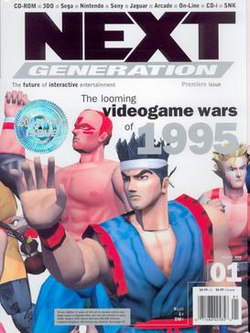
Next Generation
» see next-gen.biz as it lived, on the wayback machine
~ the obit ~
i read next generation backwards, which is to say i read it after it was already dead. the full run sits scanned on the internet archive and that is where i found it, years past the last issue. the magazines that reached me in ankara in the late nineties were turkish and they were mostly about parts, so a monthly whose actual subject was the business of making games was not a genre i knew existed.
the first issue is january 1995, out of imagine media in brisbane, california. the premise was that the interesting story in games was not the game. it was the people making it and the money standing behind them, so the pages went to interviews with developers and to analysis of hardware that had not launched yet.
it was affiliated with edge in the uk and shared content with it, which is why the two of them look related on a shelf. both used a lot of white space and both treated a games magazine as an object a thirty year old could be seen holding in public. next generation was the american half of that experiment, and the american market for it turned out to be thinner.
~ the rap sheet ~
| Born | January 1995, issue one, from Imagine Media |
|---|---|
| Peak | The industry's own magazine, sharing content with Edge in the UK |
| Killed | January 2002, issue 85 |
| Lifespan | seven years |
| Made by | Imagine Media, later Future US |
| Killed by | A games newsstand that paid for screenshots, not interviews |
~ the no-bylines rule ~
the strangest editorial decision was refusing bylines outright. no article in next generation carried an author's name, on the stated reasoning that the whole staff shared credit and blame for everything that went out the door. jonathan simpson-bint published it and the editor's chair passed through neil west and chris charla among others. you would not learn any of that from reading it.
it reads now like a small principle held at real cost. the games press of the nineties ran on personality, on named reviewers whose scores readers argued about for months. giving that up meant giving up the thing that made a reader loyal to a magazine rather than to a subject.
~ how it ended ~
the format drifted near the end. in september 1999 the cover name shortened to nextgen, and by september 2000 the page had grown from eight inches wide to nine, a change that lasted under a year. widening a magazine is what you do when you are trying to look like a different magazine.
the last issue is number eighty-five, january 2002. seven years against a readership that never got big enough. a magazine about the industry sells to people who work in the industry plus people who want to, and in 2001 that was not a newsstand.
~ the long tail ~
future brought the name back in 2005 as next-gen.biz, a trade news and jobs site aimed at exactly the readership the print edition had failed to monetize. in july 2008 it was rebranded edge-online, which quietly put the american brand inside the british one it had been paired with from the beginning.
what survives is the scans. eighty-five issues of long interviews with people who were still deciding what the medium was going to be, conducted at the one moment when nobody knew the answer yet.
~ leave a rose ~
an anonymous tribute. one rose per visitor per day.
@}-->-- ... roses left here
~ leave a wreath ~
a rose fades by morning. a wreath stays on this grave for good, with your name on it.
from $1, paid once through stripe. it keeps the graveyard running: the hosting and the nightly digging. adopt it and the headstone reads "maintained in memory by" you. the groundskeeper plants new wreaths at the next tending, usually within a day.
» one email a week: new graves and the anniversaries of the dead. subscribe
other news: Presseurop, Stylus Magazine, AfterElton.com, TVNZ Teletext
also died in the 2000s: AdCritic.com, SmarterChild, Net Detours
~ leave a note ~
visitors before you have left these graveside notes. anonymous welcome.