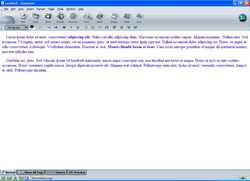
Netscape Composer
» see netscape.com as it lived, on the wayback machine
~ the last words ~
What I wanted out of a web page in those years was the source of it. The forums were where I spent my time, and a signature block with your hardware listed in it was a thing you built by reading how somebody else had built theirs. View source was the entire education. Composer was made for the person who wanted the opposite deal, who wanted the markup kept out of sight so the page could be typed like a letter, and that is a reasonable thing to want and it was never what I was there for.
It shipped on 11 June 1997 as part of Netscape Communicator 4.0, which was a browser with a mail client and a page editor bolted onto it. The editor was not new so much as promoted. Navigator Gold had carried a rougher version since 1995, sold separately at a price, and Composer was that idea cleaned up and folded into the standard product. Then in January 1998 Netscape made Communicator free, and a WYSIWYG web page editor became something you got by accident.
That accident is the reason it matters. A very large number of people who made a first web page in the late nineties did not go looking for an editor. It was sitting in the Communicator menu, under a name that told you what it was for, on a machine where the browser had already been installed by someone else.
~ the record ~
| Born | june 11, 1997, inside netscape communicator 4.0 |
|---|---|
| Peak | installed alongside the browser on millions of machines, free of charge from january 1998 |
| Killed | august 17, 2004, the last suite that shipped it |
| Lifespan | seven years as a menu item |
| Made by | netscape communications, later aol |
| Killed by | the breakup of the internet suite into single-purpose programs |
~ the publish button ~
The feature that carried the whole program was a single toolbar button. You wrote the page, you pressed Publish, and a dialog asked for a server address and a password it then remembered. Behind that was FTP, but you were not required to know it, install it, or ever see a directory listing.
Every dial-up account of the era came with a few megabytes of web space attached that most subscribers never touched, because the gap between having the space and knowing how to put something in it was wider than it looked. Composer closed that gap with one button and no explanation. The free hosts that defined the period solved the same problem with a form in a browser, and this solved it with a program you already had.
~ what it wrote ~
The output was terrible. Composer built pages out of font tags and nested tables, and wrote an inline attribute for anything you had touched. It left comments and empty elements behind wherever you had changed your mind. Open a Composer page in an editor and you could read the sequence of decisions the author had made, in reverse, like tree rings.
This is what made it a punchline for people who wrote HTML by hand, and it is also why the pages survive. Awful markup from 1999 still renders. The tags Composer leaned on were the ones browsers were most careful never to break, so a page assembled by somebody who had no idea what a tag was outlived a great deal of the careful work done alongside it.
~ the descendants ~
When AOL opened the Netscape codebase, the editor went with it and became Mozilla Composer inside the Mozilla Application Suite. Mozilla then decided its future was standalone programs, so Firefox and Thunderbird went out the door and the editor was not invited. Netscape 7.2, released on 17 August 2004, was the last suite that carried it. The Netscape browsers that followed were reskinned Firefox and had no page editor at all.
The code kept moving anyway. Nvu was built from it with Linspire's money, and KompoZer forked from Nvu when Nvu stopped. BlueGriffon came later out of the same line. All of those are finished now. The one that is still running is SeaMonkey, the community suite that refused to be split up, which still ships a program called Composer with a Publish button in it.
~ leave a rose ~
an anonymous tribute. one rose per visitor per day.
@}-->-- ... roses left here
~ leave a wreath ~
a rose fades by morning. a wreath stays on this grave for good, with your name on it.
paid once through stripe. payments are handled by OÜ Lakeview, the small company that keeps rip.so running. the money pays for the hosting and the nightly digging. adopt it and the headstone reads "maintained in memory by" you. the groundskeeper plants new wreaths at the next tending, usually within a day.
» one email a week: new graves and the anniversaries of the dead. subscribe
other software: Scientific Linux, Microsoft Response Point, Struckd, FileMaker Bento
~ leave a note ~
visitors before you have left these graveside notes. anonymous welcome.