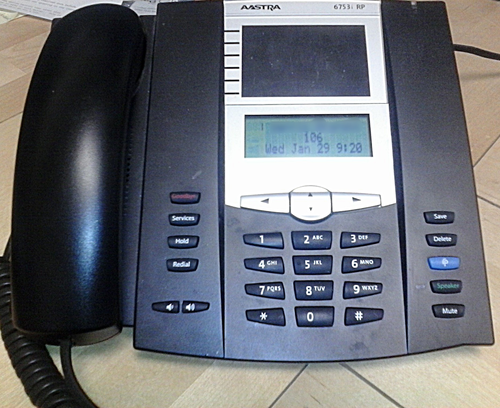
Microsoft Response Point
~ the obituary ~
In 2007 the question of which phone system a company should buy was not one anybody was going to put to me. i was in Turkey, in my early twenties, and the office phone was somebody else's furniture. Response Point was sold to a person who owned a business with fewer than fifty people in it and had to decide how those people would answer calls, and there is no version of my life in that decade where i am that person.
Microsoft announced it in march 2007 and the hardware reached the market in the last quarter of that year. It was a software PBX, running over VoIP with SIP underneath, aimed squarely at the bottom of the business market. Microsoft did not build the phones. Quanta sold it as Syspine and D-Link as VoiceCenter, with Aastra arriving later under the name AastraLink RP in july 2008. You bought a box from one of them and Microsoft's software was inside it.
Pricing landed in october 2007. Around $2,500 for the Quanta system with a base unit and four phones, more phones at $159 each. D-Link's was around $2,999 with five phones. By may 2008 you could buy one on Costco.com, which is a genuinely strange fact about a Microsoft server product and also the clearest statement of who they thought the buyer was. Not an IT department. A person who buys things.
~ the case file ~
| Born | march 2007, announced by Microsoft |
|---|---|
| Peak | about $2,500 for a base unit and four phones, on Costco.com by may 2008 |
| Killed | 31 august 2010 |
| Lifespan | three and a half years |
| Made by | Microsoft, with hardware from Quanta and D-Link |
| Killed by | small businesses who did not want it |
~ the blue button ~
Every handset had a blue button, and Microsoft's own materials called it the magic blue button, which tells you they knew it was the entire product. You held it, you said a name, and the system dialed. It read from the company directory and it would read from an individual's Outlook address book too, so the name you said could be a customer nobody else in the building had ever called.
This was 2007. Siri was four years away from shipping on a phone and the Amazon Echo was seven years out. Voice control existed mostly as an accessibility feature or a car toy that got the word wrong. Microsoft put it in an office phone for a plumbing contractor and made it the headline feature, and the trade coverage of the time led with it rather than filing it under gimmick.
~ the year it was already over ~
Service Pack 1 arrived in july 2008 with click-to-call and SIP trunking, and Service Pack 2 followed in january 2009 carrying an intercom and better tone detection. A version 2.0 was planned after that, with a softphone and an Outlook add-in among the promises. None of it was ever finished.
It was not finished because in may 2009 Microsoft moved the product to what its own statement later called engineering maintenance status. The team was cut. What that means in practice is that the product died in the middle of 2009 and stayed on sale for another fifteen months, and everybody who bought a Response Point system in that window bought a thing nobody was working on.
~ how it actually ended ~
The public announcement went out on 14 may 2010, which is the date most records carry, and the trade press wrote it up over the following days. The date in the announcement was different. Microsoft said it would discontinue the sale of Response Point effective 31 august 2010, with support and development ending alongside it, so that is the date this grave uses for the death and the may date for the news of it.
The statement was blunt in the way these rarely are. Despite favorable initial response from customers and channel partners since launch, Microsoft said, it had not seen the necessary demand materialize to sustain Response Point as a viable standalone business. Existing owners were told they could keep using their equipment under whatever agreement they had with the manufacturer that made it, which is another way of saying that the manufacturer was now alone with it.
~ what came after ~
Microsoft's answer for what small businesses should do instead was Office Communications Server, which was an enterprise product wearing a price and a deployment model that a fifteen-person company could not carry. That lineage runs through Lync into Skype for Business and ends inside Teams, where the phone system is a tab. The desk phone with a button on it did not survive the trip.
What did survive is the button itself, moved. Holding down a physical control and saying a name into it is now how a car places a call and how a watch does. Response Point had exactly that on a desk in 2007 and could not find enough small businesses who wanted it. Within a decade the same gesture was in everybody's pocket, and by then nobody thought of it as a feature at all.
~ leave a rose ~
an anonymous tribute. one rose per visitor per day.
@}-->-- ... roses left here
~ leave a wreath ~
a rose fades by morning. a wreath stays on this grave for good, with your name on it.
from $1, paid once through stripe. it keeps the graveyard running: the hosting and the nightly digging. adopt it and the headstone reads "maintained in memory by" you. the groundskeeper plants new wreaths at the next tending, usually within a day.
» one email a week: new graves and the anniversaries of the dead. subscribe
other software: Netscape Composer, Scientific Linux, Struckd, FileMaker Bento
also died in 2010-2014: TeaShark, Planet Cazmo, Nedstat
~ leave a note ~
visitors before you have left these graveside notes. anonymous welcome.