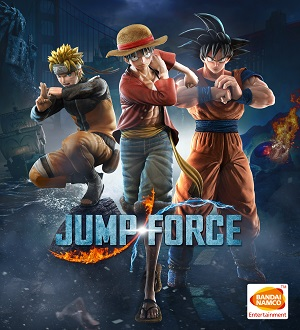
Jump Force
» see bandainamcoent.com as it lived, on the wayback machine
~ the goodbye ~
In 2019 I was writing computer vision for things that fly, in my mid-thirties, in Ankara. A Shonen Jump crossover fighter was never going to land in my week. I am writing this one anyway because of what happened to it afterward, which is the part that should worry anyone who buys games at all.
Weekly Shonen Jump turned fifty in 2018. It is the magazine that serialized Dragon Ball and One Piece and most of the rest of what the world means when it says anime, and for the anniversary Bandai Namco commissioned a fighting game where all of it could be in the same room. Spike Chunsoft developed it. Forty playable characters at launch, from sixteen different series, growing to fifty seven with the character passes.
It came out on 14 February 2019 in Japan for PlayStation 4 and Xbox One, then a day later worldwide with a Windows version. A Switch port followed in August 2020. The reviews were mixed and the complaints were consistent. Instead of a fighting game with a menu, it had a story about merged realities and an original villain, plus a hub world you walked around in with a custom avatar you made yourself. Nobody who wanted to play Goku against Luffy wanted to walk anywhere first.
There was also the look. Spike Chunsoft rendered every character in a semi-realistic style meant to unify art from sixteen sources, and what came out was a room full of familiar faces with the wrong texture on them. Some of it worked. Most of the discussion about the game in its first year was about how it made people feel to look at it.
~ the chronicle ~
| Born | 14 february 2019 in japan, a day later everywhere else |
|---|---|
| Peak | fifty seven characters across sixteen shonen jump series |
| Killed | 24 august 2022, online services off |
| Lifespan | three years and six months |
| Made by | spike chunsoft, published by bandai namco entertainment |
| Killed by | expiring licenses, almost certainly, though nobody ever said the word |
~ how it landed ~
None of that made it a failure in commercial terms. The PS4 version alone moved a hundred and ninety thousand physical copies in Japan by mid-March 2019, and the Switch port was the seventh best selling game of its opening week in the country a year and a half later. This was a game with a real audience that had paid real money and expected the usual arrangement, which is that a game you have bought stays bought.
Support continued through 2020 and into 2021. Characters kept arriving. Then in November 2021, with no warning anyone recognized as one, Bandai Namco posted a notice thanking players and announcing that the whole thing was being withdrawn.
~ the day it died ~
The notice gave no reason. It gave a schedule. On 8 February 2022 Jump Force was removed from every digital storefront along with all of its downloadable content, so Steam and the console stores stopped listing a three year old game that was still selling. On 24 August 2022 the online ranked matches stopped working.
Everyone assumed licensing, and everyone is probably right. A roster of fifty seven characters is a roster of sixteen separate rights agreements with sixteen separate rights holders, negotiated for a fixed term around an anniversary that had passed. Renewing all of them for a game with mixed reviews is a worse business than letting them lapse. Bandai Namco never confirmed this, because a publisher that says out loud that its licenses expire is a publisher explaining why you should not preorder the next one.
~ what got buried with it ~
If you bought Jump Force you can still play it. The offline content runs and so does the DLC you already paid for. What you cannot do is buy it now, or get it back if the account it was attached to goes. A licensed crossover is the one kind of game with a built-in expiry date, and nobody prints that date on the box.
This is the fate waiting for a specific shelf of games and the shelf is getting longer. Anything with a music license on the soundtrack, anything with a car manufacturer's name on the bodywork. They do not die from neglect or from server costs. They die because a contract ran out in an office somewhere and the cheapest legal move was to remove the product from sale. Jump Force is worth a headstone mostly as a receipt: a working, selling, actively supported game can be taken off the market in a single day, and there is no version of ownership that protects you from it.
~ leave a rose ~
an anonymous tribute. one rose per visitor per day.
@}-->-- ... roses left here
~ leave a wreath ~
a rose fades by morning. a wreath stays on this grave for good, with your name on it.
from $1, paid once through stripe. it keeps the graveyard running: the hosting and the nightly digging. adopt it and the headstone reads "maintained in memory by" you. the groundskeeper plants new wreaths at the next tending, usually within a day.
» one email a week: new graves and the anniversaries of the dead. subscribe
other gaming: Kaos Studios, Game Boy, Moshi Monsters, The Sims Social
also died in the 2020s: Jumpshot, Yahoo India, MemeStreams
~ leave a note ~
visitors before you have left these graveside notes. anonymous welcome.