CueCat
» see digitalconvergence.com as it lived, on the wayback machine
~ the obit ~
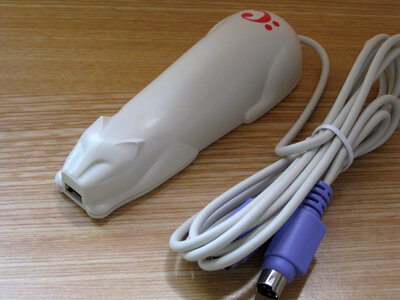
the cuecat was a small barcode scanner shaped like a cat, distributed free with US magazines in late 2000. you plugged it into your computer's PS/2 or USB port. you scanned a barcode in a wired or forbes ad. a piece of software on your machine recognized the code and opened a related URL in your browser. that was the entire concept.
i never used a cuecat. they were a US-only product and the distribution mostly happened through magazines i did not get in turkey. but the cuecat shows up in any list of dotcom-era flops, and the privacy story around it is part of how the early-2000s internet learned about consumer-data practices.
the device was made by a dallas company called digital:convergence, founded by an entrepreneur named J. Jovan Philyaw. the pitch to advertisers was that print magazines were going digital and the cuecat was the bridge. the pitch to magazines was that they could include scannable codes in their pages and earn a cut of any traffic generated. the pitch to consumers was that scanning a barcode was easier than typing a URL.
none of those pitches worked. by the end of 2001 digital:convergence was out of money and out of partners. the company filed for bankruptcy. the cuecat became a curio. it has had a strange long afterlife: hacked into a regular barcode scanner, it is reportedly still in use in some small libraries and home-cataloging projects.
~ the rap sheet ~
| Born | September 2000 (mass distribution begins) |
|---|---|
| Killed | 2001 (Digital:Convergence bankruptcy) |
| Lifespan | ~16 months |
| Made by | Digital:Convergence (J. Jovan Philyaw, Dallas) |
| Distributed via | Wired, Forbes, Radio Shack, free in mailings |
| Killed by | the dotcom crash, the privacy lawsuit, nobody using barcode scanners on magazines |
~ how it actually worked ~
the hardware was a small barcode reader with a USB or PS/2 cable. the cat shape was the only memorable thing about the casing. inside was a basic linear barcode scanner. the included software ran on windows and intercepted the keyboard input from the scanner.
the trick was that the software did two things at once. first, it recognized the standard product barcode (UPC or whatever the magazine printed) and converted it to a URL via digital:convergence's servers. second, it sent every scan along with a unique cuecat serial number to the same servers. so digital:convergence knew which cuecat scanned which barcode at which time. that was the data model.
this also meant the device was useless without the company's servers. unlike a generic barcode scanner that would just produce text strings, the cuecat needed digital:convergence to translate codes to URLs. when the company collapsed, the official software stopped working. you could not even use the device as a basic barcode scanner without modifications.
~ the privacy disaster ~
the unique-serial-number behavior was what made the cuecat into a privacy story. early adopters figured out within weeks that every scan they did was being logged with a unique ID that could potentially be cross-referenced with their personal info (the registration form had asked for name and address). this was 2000, when nobody had yet had the conversation about consumer-tracking devices, and the early-internet culture treated it as a serious violation.
in november 2000 forbes had a security incident: a database with names, addresses, and email addresses of about 140,000 cuecat registrants was found publicly accessible online. the leak made the news. it added to the perception that digital:convergence was reckless with consumer data.
in parallel, hackers wrote tools to "neuter" the cuecat. you could modify the firmware or just strip the digital:convergence software and use the device as a generic barcode scanner. instructions for how to do this were posted on slashdot and in computer magazines. digital:convergence sent legal threats to some of the people posting these instructions, which produced more bad press, which sped up the company's decline.
~ why it failed (besides the obvious) ~
the basic premise was wrong in a few directions at once. people who already had a computer and the time to scan a magazine barcode were not really saving any time over just typing a URL. people who did not have a computer were not the target audience. the cuecat was a solution to a problem that did not actually exist for the people who would have used it.
the print-to-web bridge had also already been solved by URL shorteners and memorable advertising URLs. ads in magazines could just say "visit example.com/wired" and that was as easy as scanning. the cuecat added hardware to a problem that did not need hardware.
the timing was also brutal. digital:convergence raised about 185 million dollars in funding. they distributed about a million cuecats. all of this happened in 2000, the same year the dotcom bubble burst. by mid-2001 the funding environment had completely changed. companies with weak business models could no longer raise more money to keep going. cuecat was one of many.
~ what we learned ~
hardware advertising attached to consumer software is hard. cuecat was an early example of trying to put a marketing-data device into people's homes. that idea has come back many times since (smart TVs that track viewing, smart speakers, various IoT devices that exist mostly to feed analytics). consumers learned to be suspicious of free hardware. cuecat is part of why.
the dotcom era's appetite for ridiculous physical products was real. cuecat sits next to webvan trucks, kozmo.com bike couriers, and pets.com sock puppet merchandise as artifacts of a moment when companies were spending venture money on physical things they could give away. very little of that survived. the cuecat survived as a hobbyist tool because it was, accidentally, a decent piece of hardware. that was not the plan but it is the legacy.
the device itself is a small cult object. used cuecats sell on ebay for ten or twenty dollars. they show up in libraries and home-cataloging hobby setups. owners typically run them with the cracked firmware and a script that just outputs the raw barcode as text. as a scanner, they work fine. as the magazine-to-web bridge of 2000, they died with the dotcom crash.
~ leave a rose ~
an anonymous tribute. one rose per visitor per day.
@}-->-- … roses left here
~ leave a note ~
visitors before you have left these graveside notes. anonymous welcome.