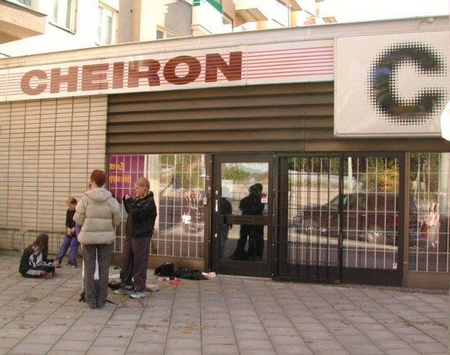
Cheiron Studios
» see cheiron.se as it lived, on the wayback machine
~ the obit ~
Cheiron started as the leftovers of a company split. SweMix, a Stockholm remix collective, divided in 1991 and then divided again, and in 1992 the publishing and records half was sold to BMG and taken over by Denniz PoP and Tom Talomaa, who renamed it Cheiron and moved into a studio in Kungsholmen. The same year a Danish label sent Denniz a demo tape by an unknown band called Ace of Base, with a reggae track on it he did not like. He remixed it anyway, retitled it All That She Wants, and it went around the world.
The next few years were a hiring spree. Talomaa agreed to release an album by a Swedish funk metal band called It's Alive in 1993; the record failed, but Denniz noticed the singer, Martin Sandberg, and brought him in as a songwriter. Sandberg was renamed Max Martin. Kristian Lundin and John Amatiello came next as the writing duo Amadin, with David Kreuger and Per Magnusson after them. Andreas Carlsson was hired in 1997. From 1996 the studio ran a joint production and publishing venture with the Zomba Group, and the first record out of that deal was the Backstreet Boys' debut.
Denniz PoP was diagnosed with stomach cancer in November 1997 and was too ill to collect the honorary Grammis prize he shared with Max Martin in 1998. He died on 30 August that year at thirty-five. Martin took over as director, and the two biggest things Cheiron ever did happened after the funeral. Jive sent over a sixteen-year-old called Britney Spears to cut a set of songs, one of which was Baby One More Time, a track TLC had already turned down. Then came Millennium for the Backstreet Boys.
In Turkey between 1998 and 2002 these were the songs on the radio, and after that the mp3 files that went around internet cafe machines with the artist in the file name and nothing else. The Swedish part was invisible from where I sat. It took years, and the internet getting better at crediting the people who write records, before it was general knowledge that a serious share of the pop music of a decade came out of one address in Stockholm.
~ the rap sheet ~
| Born | 1992 in Kungsholmen, Stockholm, out of the SweMix remix collective |
|---|---|
| Peak | Millennium in 1999 and Oops!... I Did It Again in 2000, both of them sales records |
| Killed | 2000, announced in a note signed Stockholm August 2000 |
| Lifespan | 8 years |
| Made by | Denniz PoP and Tom Talomaa |
| Killed by | the death of its founder, and a decision to stop while it was winning |
~ swemix ~
The pre-history is worth having. In 1986 ten Swedish club DJs started SweMix as a remix service, built to compete with the American subscription remix pools. Dag Krister Volle was one of them, along with Sten Hallström, who later worked as StoneBridge. The early releases on their Remixed Records label were bootlegs, remixed without permission and pressed for underground distribution, and they found an audience well outside Scandinavia.
Tom Talomaa came in as the person who bought better equipment, and once the studio was properly fitted out musicians started turning up wanting to use it. Two labels came out of that: Basement Division for the underground records and SweMix Records for the commercial ones. SweMix Records signed Dr. Alban and Leila K, and Denniz PoP produced the Dr. Alban single Hello Afrika in 1990. In 1991 Remixed Records was sold off, and the following year the rest of it broke apart into the pieces that became Cheiron.
~ the sound ~
The Cheiron sound is specific enough to describe in technical terms. The Guardian characterized it as melodic but hard-edged, and credited it with the same happy-sad quality people had already identified in ABBA. In practice it meant R&B rhythm underneath Swedish pop melody, and choruses built in major keys to be as large as the arrangement could carry.
It became the default sound of commercial pop around 2000, and the lineage did not stop when the studio did. Max Martin has gone on placing number ones in the twenty-five years since, with the same method, and the writers who trained in that room staffed a large part of the industry that followed.
~ the note on the website ~
By the end of 2000 the Zomba venture signed in 1996 had run out, and Talomaa and Martin decided to close rather than renew. They posted a statement on cheiron.se saying Cheiron had been created with the intention of having fun and making a few hits without getting too serious about it, and that the hype of Cheiron had become bigger than the studio itself, so it was time to quit while they were ahead. A version of the farewell was signed Stockholm August 2000.
Talomaa and Max Martin reformed the company as Maratone, and Kristian Lundin set up Location Songs with Jake Schulze. David Kreuger and Per Magnusson went off to run their own production outfit under the name A Side. The room itself passed to Roxy Recordings, so the address kept making records with other people's names on them.
cheiron.se still resolves. What sits on it now is a Swedish blog about studio acoustics and music production, and whoever runs it has no stake in the studio that used to hold the name. The capture from October 2000 is the last version of that address that belonged to Cheiron.
~ leave a rose ~
an anonymous tribute. one rose per visitor per day.
@}-->-- ... roses left here
~ leave a wreath ~
a rose fades by morning. a wreath stays on this grave for good, with your name on it.
paid once through stripe. payments are handled by OÜ Lakeview, the small company that keeps rip.so running. the money pays for the hosting and the nightly digging. adopt it and the headstone reads "maintained in memory by" you. the groundskeeper plants new wreaths at the next tending, usually within a day.
» one email a week: new graves and the anniversaries of the dead. subscribe
other media music: Radio & Records, Record Mirror, Olivia Records, MXTabs
also died in the 2000s: Indeo Video, Dragon's Gate, Lokace
~ leave a note ~
visitors before you have left these graveside notes. anonymous welcome.