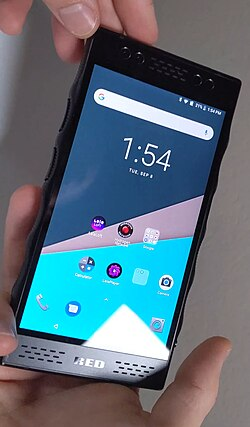
RED Hydrogen One
» see red.com as it lived, on the wayback machine
~ the goodbye ~
In 2018 i was a computer engineer in Ankara working on real cameras and real vision problems, and the RED Hydrogen One was never going to reach me. It launched at around thirteen hundred dollars on two american carriers, which put it in a bracket i would not touch and a market i was not in. This was a US enthusiast object, aimed at the sort of buyer who already owned RED cinema gear. I read about it the way you read about a strange expensive thing happening somewhere else.
RED made its name on cinema cameras that film crews actually shoot movies with. In 2017 the company announced it would make a phone, and the whole story rode on the screen. RED called it a holographic display, branded 4V, built with a startup named Leia that used tiny nanostructures to bend the backlight into a light field so 3D content gained a sense of depth. In practice it added a shallow pop to a narrow slice of media, and reviewers were not kind. The Verge put it below a Nintendo 3DS.
It slipped past its dates and finally shipped on 2 november 2018. The reviews landed flat, the promised camera modules that were supposed to link it to RED's cinema world never appeared, and by early 2019 the company had quietly scrubbed the accessory talk off its own site. In october 2019 RED confirmed it was done. Founder Jim Jannard retired, and the company left the smartphone business after exactly one model.
~ the chronicle ~
| Born | released 2 November 2018 in the US on AT&T and Verizon |
|---|---|
| Peak | a $1,300 launch price and a wall of skeptical reviews |
| Killed | October 2019 |
| Lifespan | about one year on sale |
| Made by | RED, the cinema-camera company founded by Jim Jannard |
| Killed by | poor reviews and a founder who retired |
~ how it landed ~
The Hydrogen One was a hardware company's answer to a question almost nobody was asking. The 3D-depth screen was the entire reason to buy it, and it was not good enough to carry a phone that cost more than the flagships it sat next to. Without the modular camera ecosystem RED had hinted at, it was a heavy, overpriced Android device with a gimmick display.
~ what remains ~
It joined a specific graveyard: ambitious phones from companies that were brilliant at something adjacent and assumed that would transfer. The screen tech had a small afterlife, since Leia kept working on light-field displays for other uses. The phone itself is remembered mostly as a warning about leading with a feature that demos worse than it sounds.
~ leave a rose ~
an anonymous tribute. one rose per visitor per day.
@}-->-- ... roses left here
~ leave a wreath ~
a rose fades by morning. a wreath stays on this grave for good, with your name on it.
paid once through stripe. payments are handled by OÜ Lakeview, the small company that keeps rip.so running. the money pays for the hosting and the nightly digging. adopt it and the headstone reads "maintained in memory by" you. the groundskeeper plants new wreaths at the next tending, usually within a day.
» one email a week: new graves and the anniversaries of the dead. subscribe
other gadgets: Intel Viiv, Symbian OS, Psystar, Floating Point Systems
also died in 2015-2019: Google Pinyin, Lashou, Corbis
~ leave a note ~
visitors before you have left these graveside notes. anonymous welcome.