Enciclopedia Libre Universal en Español
» see enciclopedia.us.es as it lived, on the wayback machine
~ the last words ~
Wikipedia was thirteen months old in February 2002 and it had a rumor problem. Bomis, the company Jimmy Wales ran and which paid for the servers, was believed to be preparing to put advertising on the site. There was no announcement, only a badly handled remark and a silence that went on too long. On 26 February the contributors to the Spanish edition left in a body, led by Edgar Enyedy, and took the articles with them, which the license explicitly permitted. The University of Seville gave them hosting for nothing, and Enciclopedia Libre Universal en Español went up the same week.
The grievances were broader than the advertising. Non-English Wikipedias were running older versions of MediaWiki than the English one. National groups who offered to help with the software were refused access to the servers. The downloadable database dumps that were supposed to guarantee anyone could leave were badly out of date, which made the freedom to fork more theoretical than anyone was comfortable with. And the site lived at wikipedia.com, a commercial domain, which read as a statement of intent.
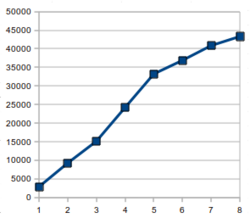
For roughly the first two years the fork was the larger encyclopedia. Plot the two article counts against each other and the Spanish Wikipedia does not overtake it until around 2004. After that the lines separate permanently. Wikipedia went past a million Spanish articles by 2013. Enciclopedia Libre settled somewhere near fifty thousand and stayed there for a decade.
By September 2023 the site reported 3,921 registered users and one active editor. Some time during 2024 it stopped operating altogether. enciclopedia.us.es does not resolve today.
~ the record ~
| Born | 26 february 2002, when the spanish wikipedia's contributors forked it |
|---|---|
| Peak | ahead of the spanish wikipedia on article count until about 2004, then steady near fifty thousand |
| Killed | 2024, when the site stopped answering |
| Lifespan | twenty-two years |
| Made by | spanish wikipedia editors led by edgar enyedy, hosted by the university of seville |
| Killed by | the thing it was protesting, which fixed the problem and then grew a hundredfold |
~ why they left ~
It is easy to read the split as a misunderstanding that got out of hand, and Enyedy's own account rules that out. Speaking to Wired in 2011 he said the project was not intended to last: "It was merely a form of pressure. Some of the goals were achieved, not all of them, but it was worth the cost." He also had no patience for the romantic version in which Enciclopedia Libre survived and thrived, calling it a nice view and not a factual one.
That is a rarer thing than it sounds. Most forks are launched by people who believe they are going to win, and most of them spend years insisting they still might. This one was built as leverage by someone who said so out loud, nine years later, while it was still running.
~ what the fork actually won ~
Wikipedia moved from wikipedia.com to wikipedia.org. It never carried advertising, and the commitment against it hardened into an identity that the Wikimedia Foundation was built around the following year. Whether the Spanish walkout caused that or accelerated a decision already forming is not resolvable, but it was the loudest available evidence that the license was real and that a community could pick up the whole encyclopedia and go.
Spanish is the second language of the internet by native speakers, and in 2002 it was Wikipedia's most active non-English edition. Losing it for two years was not a rounding error. Some of the editors returned as the fears receded, and the Spanish Wikipedia rebuilt from a smaller base than it should have had, which is the cost Enyedy said was worth paying.
~ from a distance of one alphabet over ~
I was eighteen in February 2002, a first-year student in Turkey, and I did not hear about any of this at the time. Wikipedia was barely on my radar in any language and the Turkish edition was a stub farm for years afterward. The part that reaches me is the mechanism rather than the drama. A license that lets people take the entire body of work and leave is only a real guarantee if somebody occasionally uses it, and the Spanish editors used it early enough that the answer arrived before the project was too big to move.
~ the long quiet ~
What happened afterward was not a collapse. It was twenty years of a site that kept working, kept its articles online, and gradually stopped being edited. A fork run for free on a university's servers has no payroll and no investor, so nothing forces the decision to close. It just gets quieter, one editor at a time, until the last one stops and the machine keeps serving pages to nobody.
Then in 2024, with no announcement anyone recorded, the University of Seville's server stopped answering for it. The 2002 walkout is the part that made the history books, and it took a further twenty-two years for the thing they walked out to actually end.
~ leave a rose ~
an anonymous tribute. one rose per visitor per day.
@}-->-- ... roses left here
~ leave a wreath ~
a rose fades by morning. a wreath stays on this grave for good, with your name on it.
from $1, paid once through stripe. it keeps the graveyard running: the hosting and the nightly digging. adopt it and the headstone reads "maintained in memory by" you. the groundskeeper plants new wreaths at the next tending, usually within a day.
» one email a week: new graves and the anniversaries of the dead. subscribe
other collaboration: Flowdock, Edorble, Distill, Wikispaces
also died in the 2020s: Torch Browser, Citizen News, openSNP
~ leave a note ~
visitors before you have left these graveside notes. anonymous welcome.