Conflict Catcher
» see casadyg.com as it lived, on the wayback machine
~ the goodbye ~
conflict catcher was the kind of utility mac classic owners ran. that was not my crowd in the 90s. i was on dos and then windows, and the closest i got to a mac in turkey was watching a friend in university try to make a family imac connect to ttnet through a usb adapter that did not have working drivers. the whole extensions-folder ecosystem sat on the other side of a wall.
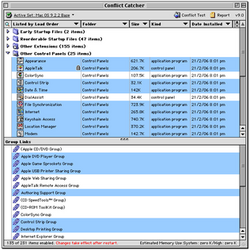
casady and greene shipped conflict catcher 1.0 in 1992 for system 7. jeff robbin wrote the code. david pogue wrote the printed manual. the product solved one problem precisely: the classic mac os booted by loading every file in the extensions and control panels folders in order, and any pair of those extensions could disagree in a way that crashed the boot before the desktop drew. you would not know which two were fighting. conflict catcher would.
the tool walked your extensions in groups and restarted the mac between rounds, binary-searching the conflict down to the single file that caused it. once it told you, you disabled the file or reordered the load and the boot worked again. version 9.0.1 in 2002 was the last release. mac os x came out in 2001 and replaced the classic extension system with a posix-style userland that did not load extensions like that anymore.
~ the chronicle ~
| Born | 1992 (v1.0, Casady & Greene) |
|---|---|
| Peak | Conflict Catcher 8, late 1990s |
| Killed | 2002 (final v9.0.1 for Mac OS 9, no OS X port) |
| Lifespan | 10 years |
| Made by | Jeff Robbin, published by Casady & Greene |
| Killed by | Mac OS X removing the classic extension architecture |
~ the breakout ~
the classic mac os had no kernel boundary between the system and the third-party code that ran in it. that was the design. extensions and control panels were dropped into a folder and the boot loader pulled them in by alphabetical order. one corporate office could have twenty extensions installed from twenty different vendors, each one patching the os in a slightly different way. the conflicts were not edge cases. they were the daily mode of operation.
conflict catcher did the unglamorous diagnostic work in the background and presented you a list at the end. it stayed on every working mac power user's machine through the system 7 and mac os 8 era. version 8 in 1999 was the high point of the franchise, with the cleanest interface and the smartest binary search. by then the tool was a sixty-three dollar utility competing in a niche that was about to vanish.
~ how it actually ended ~
mac os x shipped in march 2001. the new system loaded its kernel from xnu and ran cocoa and carbon apps inside a posix userland. there was no extensions folder you dropped third-party patches into. the architectural condition that made conflict catcher necessary stopped existing. jeff robbin shipped version 9.0.1 in 2002 as a final release for the holdouts still booting mac os 9. there was nothing left to do.
casady and greene filed for bankruptcy in july 2003. the company had been the small-publisher home for indie mac software for two decades, including soundjam mp, which apple bought in may 2000 and renamed itunes 1.0. jeff robbin went with the soundjam deal and led the itunes team at apple for the next decade. conflict catcher's author shipped the most-used media player on the planet for the rest of his career.
~ what remains ~
classic mac os power users miss conflict catcher more than they miss almost any other dead utility from that era. it was a tool that fixed a problem on the system you were using right now, with an interface that explained what it was doing. nothing in mac os x ever needed to replace it because the new system was built to make the problem impossible. for the people who lived through the extensions folder, conflict catcher was the friend that kept the mac running.
~ leave a rose ~
an anonymous tribute. one rose per visitor per day.
@}-->-- ... roses left here
~ leave a wreath ~
a rose fades by morning. a wreath stays on this grave for good, with your name on it.
from $1, paid once through stripe. it keeps the graveyard running: the hosting and the nightly digging. adopt it and the headstone reads "maintained in memory by" you. the groundskeeper plants new wreaths at the next tending, usually within a day.
» one email a week: new graves and the anniversaries of the dead. subscribe
other software: AOL Media Player, iRows, Z Launcher, Compatible Time-Sharing System
also died in the 2000s: AOL Media Player, L0pht Heavy Industries, Club Nokia
~ leave a note ~
visitors before you have left these graveside notes. anonymous welcome.